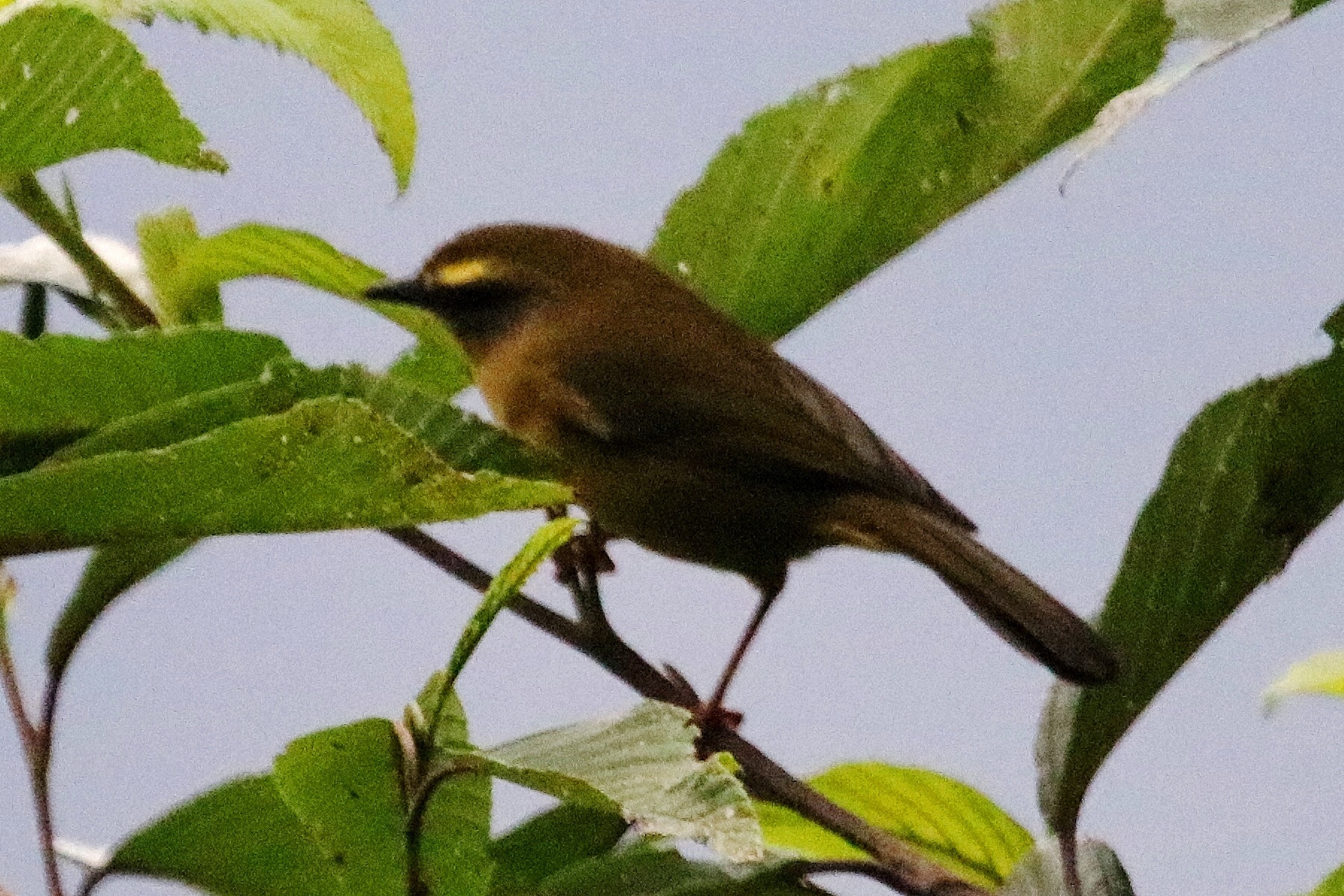
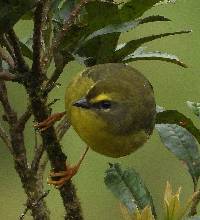
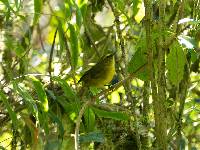
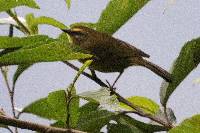
The citrine warbler (Myiothlypis luteoviridis) is a species of bird in the family Parulidae, the New World warblers. It is found in Bolivia, Colombia, Ecuador, Peru, and Venezuela. The species' English name derives from the Latin citrus which means "yellow".
Taxonomy and systematics
The citrine warbler was formally described in 1845 as Trichas luteoviridis. At some point it was reassigned to genus Basileuterus. By 2012 the IOC had reassigned it to its present genus Myiothlypis. BirdLife International's Handbook of the Birds of the World (HBW) did so in 2016.
The citrine warbler's further taxonomy is unsettled. The IOC, the Clements taxonomy, and AviList assign it these five subspecies:
However, in 2016 HBW split M. l. striaticeps as the species "Peruvian citrine warbler" and M. l. euophrys as the "Bolivian citrine warbler". It renamed the reduced M. luteoviridis the "northern citrine warbler". As of late 2025 HBW retained these three species. Clements recognizes some distinctions within the species, somewhat mirroring HBW by calling M. l. striaticeps the "citrine warbler (Peruvian)", M. l. euophrys the "citrine warbler (Bolivian)", and grouping the other three as the "citrine warbler (northern). AviList notes, "Geographic patterns in plumage and vocalizations suggest the presence of three groups, but detailed genetic and bioacoustic studies are needed before making any splits."
This article follows the majority five-subspecies model.
Available at http://www.worldbirdnames.org/
Description
The citrine warbler is 13 to 14 cm (5.1 to 5.5 in) long and weighs 12 to 20 g (0.42 to 0.71 oz). The sexes have the same plumage. Adults of the nominate subspecies M. l....