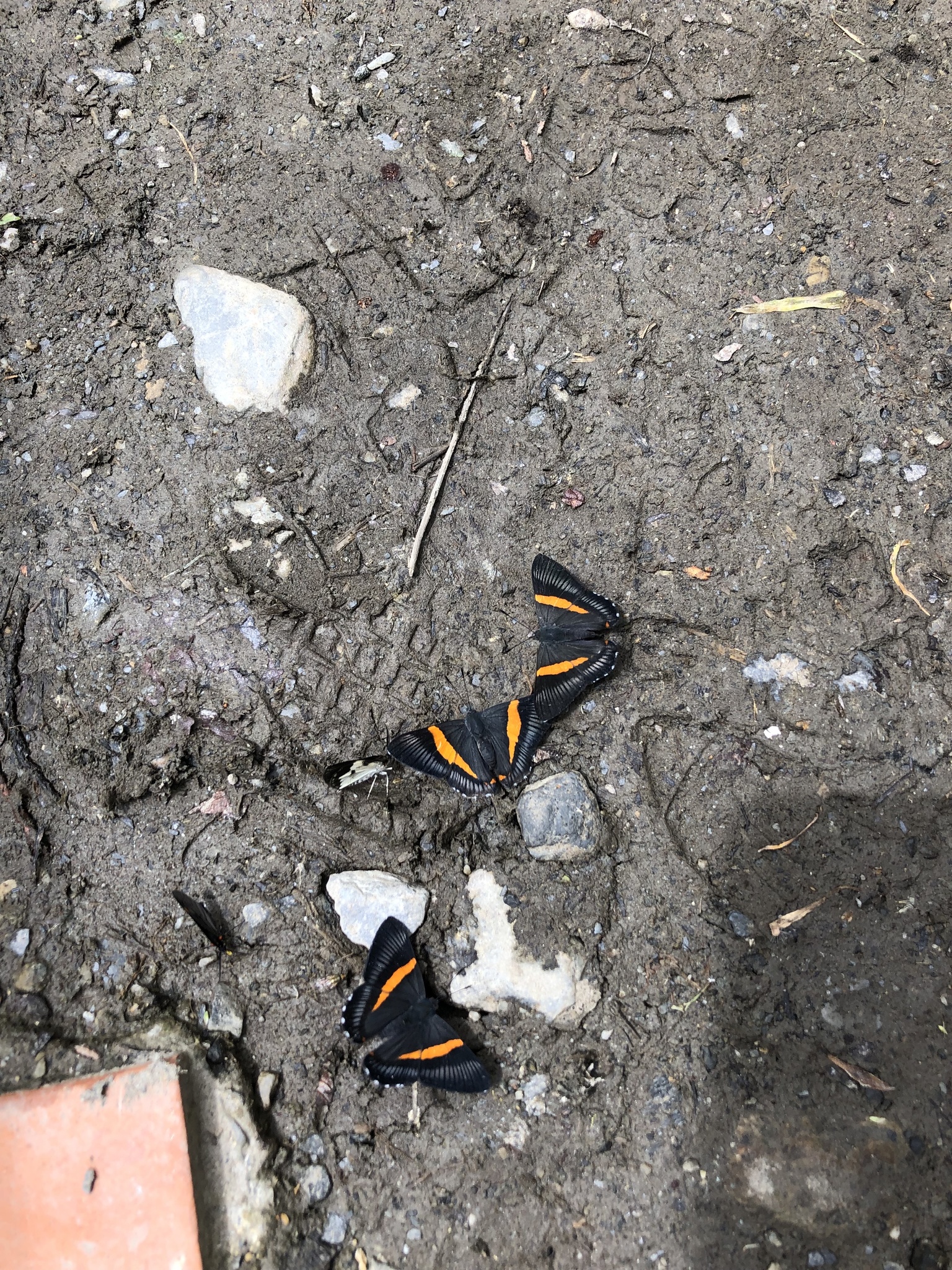
Riodinidae is the family of metalmark butterflies. The common name "metalmarks" refers to the small, metallic-looking spots commonly found on their wings. The 1,532 species are placed in 146 genera. Although mostly Neotropical in distribution, the family is also represented both in the Nearctic, Palearctic, Australasian (Dicallaneura), Afrotropic (Afriodinia, Saribia), and Indomalayan realms.
Description
The family includes small to medium-sized species, from 12 to 60 mm wingspan, often with vibrant structural colouring. The wing shape is very different within the family. They may resemble butterflies in other groups, some are similar to Satyrinae, some are bright yellow reminiscent of Coliadinae and others (examples Barbicornis, Rhetus arcius, Helicopis, Chorinea) have tails as do Papilionidae. The colouration ranges from muted colours in the temperate zone species to iridescent blue and green wings and transparent wings in tropical species. The golden or silvery metallic spots on the wings in many species of the Americas gave them the English common name "metalmarks". A number of species mimic poisonous moths of several families and there are often extensive mimicry rings of similar-looking species, grouped around a model. Mimicry causes often closely related species to have completely different wing patterns, for example the genus Thisbe. Many species mimic the stain and stripe pattern of toxic Nymphalidae. Batesian mimicry seems to be more common than in any other insect family of similar size. Reasons for this are unknown. Another example is Ithomeis where different subspecies resemble the species they mimic in different parts of the geographic range more than they resemble each other.
The delimitation from the closely related Lycaenidae by morphological autapomorphy is difficult. The first pair of legs of the males, which arises on the prothorax, is less than half as long as the legs of the pterothorax and they are not used for walking. The individual...