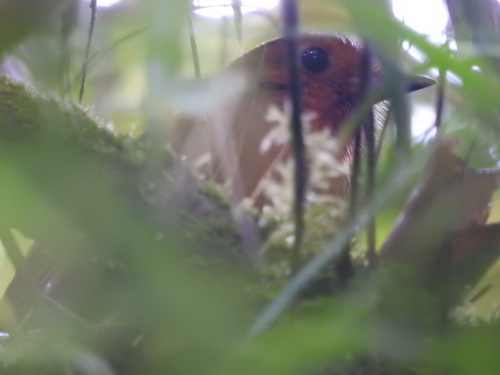
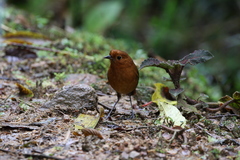
The Muisca antpitta (Grallaria rufula sensu stricto) is a bird in the family Grallariidae. The species was first described by Frédéric de Lafresnaye in 1843. It was formerly called the rufous antpitta, which in 2020 was found to be a species complex composed of as many as 15 species, some of which were newly described. It is found in the Andes of northern Colombia and western Venezuela.
Taxonomy and systematics
What is now the Muisca antpitta inherited the scientific name Grallaria rufula after the rufous antpitta's taxonomic split because the type specimen for G. rufula had been found near Bogotá in what is now recognized as the Muisca antpitta's range. The species and subspecies resulting from the split and newly recognized taxa were separated based on plumage, vocalizations, and genetic evidence.
In 2021 the International Ornithological Committee and the Clements taxonomy implemented the split of the rufous antpitta and accepted the newly described species. The revised Grallaria rufula, now called the Muisca antpitta, has no subspecies and is thus monotypic according to those taxonomies. However, BirdLife International's Handbook of the Birds of the World (HBW) did not fully implement the split. It retains the name rufous antpitta for Grallaria rufula and retains six of the seven previous subspecies within it. It had split only the former G. r. saltuensis as the Perija antpitta in 2018.
The species' new common name was chosen in 2020 for the Muisca civilization of the eastern Andes, which continues to this day in contemporary Colombian society. The specific epithet, rufula, comes from the Latin for 'red-headed' or rufous.
This article follows the monotypic species model.
Description
Grallaria antpittas are a "wonderful group of plump and round antbirds whose feathers are often fluffed up...they have stout bills very short tails". The Muisca antpitta is about 14 to 15 cm (5.5 to 5.9 in) long; four individuals weighed 32 to 36 g (1.1 to 1.3 oz)....