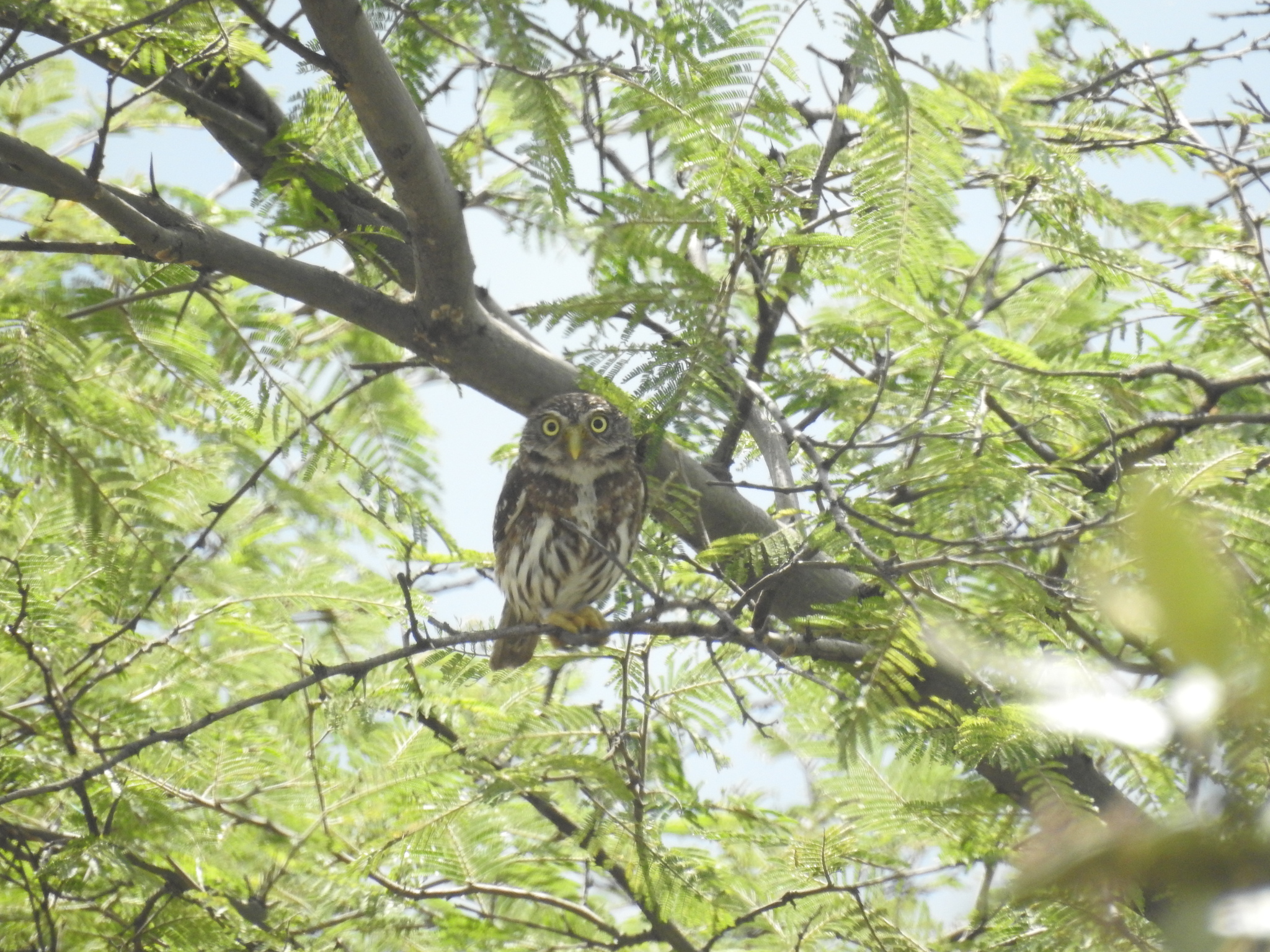
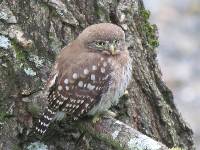
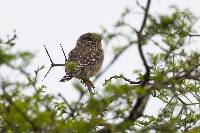
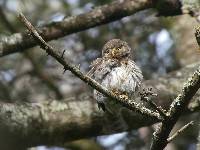
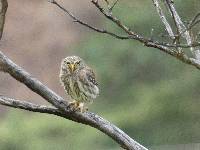
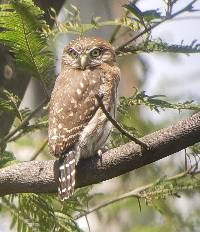
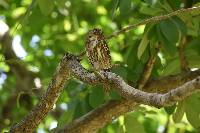
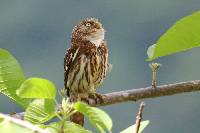
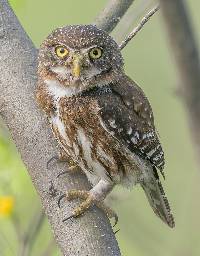
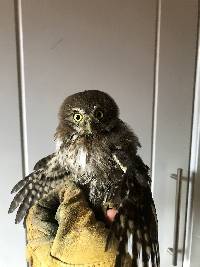
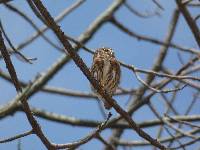
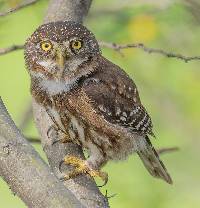
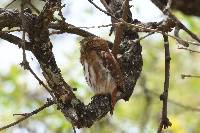
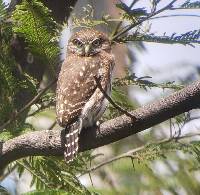
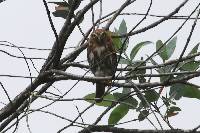
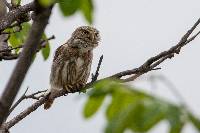
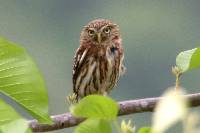
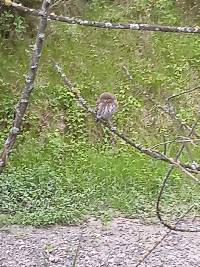
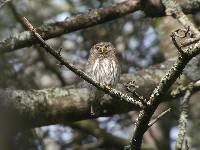
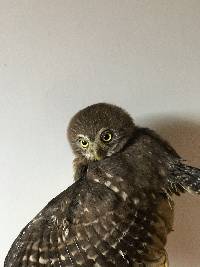
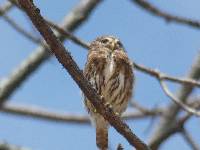
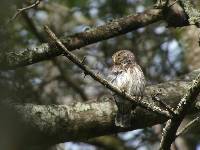
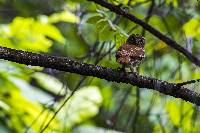
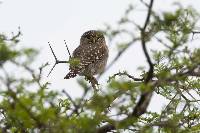
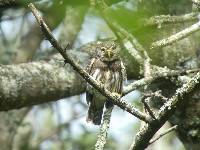
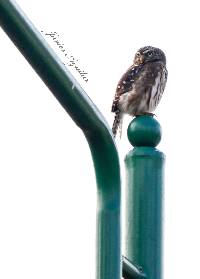
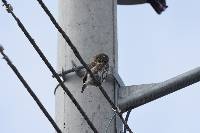
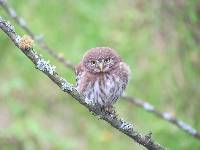
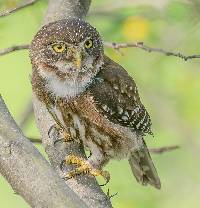
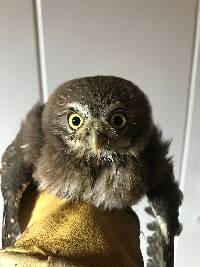
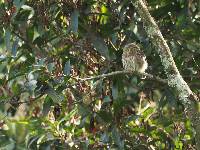
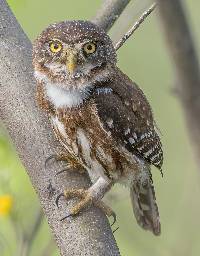
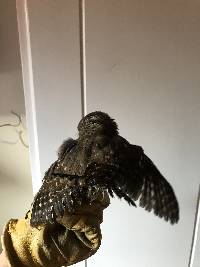
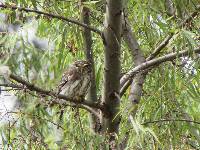
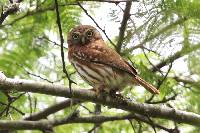
The Pacific pygmy owl (Glaucidium peruanum), or Peruvian pygmy owl, is a small "typical owl" in subfamily Surniinae. It is found in Chile, Ecuador, and Peru.
Taxonomy and systematics
The Peruvian pygmy owl was first described as a species by Claus König, a German ornithologist, in 1991. Until then it had been treated as a subspecies of the widespread ferruginous pygmy owl (G. brasilianum). König separated the two primarily by their vocal differences; their ranges do not overlap. The Pacific pygmy owl is monotypic.
Description
The Pacific pygmy owl is 15 to 17 cm (5.9 to 6.7 in) long. Males weigh about 60 g (2.1 oz) and females about 65 g (2.3 oz). In addition to being heavier, females also have slightly longer wings and tails than males, but both sexes have the same plumage. The species has gray, brown, and rufous color morphs, with the first two predominating. The upperparts of gray morph adults are grayish brown with buff streaks on the forecrown and buff spots on the crown and nape. An incomplete white "collar" and oval black spots on the neck give the appearance of eyes. The shoulders and back have whitish spots. The tail is also grayish brown, with up to seven whitish bars across it. The throat is white, the sides of the breast grayish brown, and the rest of the underparts whitish with rufuous streaks. The other morphs replace the grayish brown with dark brown or rufous respectively. In addition, the bars on the rufous morph's tail are rusty brown or orange-buff and the streaking on the underparts is more diffuse than on the other two morphs. In all morphs the eye is lemon yellow and the bill and feet yellow-green. Juveniles have essentially the same plumage as adults but their crown has no streaks or spots.
Distribution and habitat
The Pacific pygmy owl is found on the western slope of the Andes from Manabí, Pichincha, and Los Ríos provinces in north-central Ecuador south through Peru into Chile as far as the Antofagasta Region. It also is found in several semiarid...