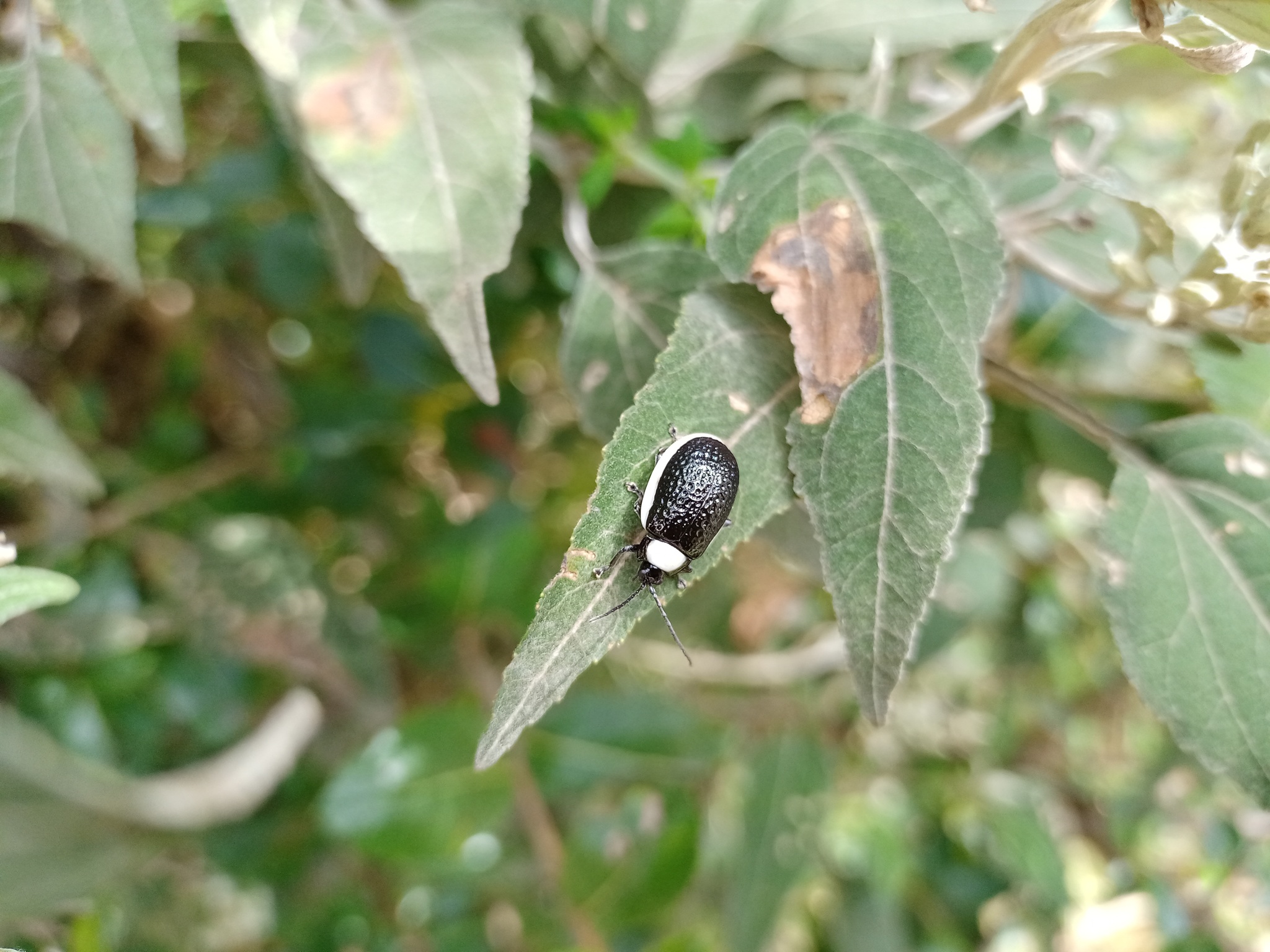
The beetle family Chrysomelidae, commonly known as leaf beetles, includes over 37,000 (and probably at least 50,000) species in more than 2,500 genera, making it one of the largest and most commonly encountered of all beetle families. Numerous subfamilies are recognized, but the specifics of leaf beetle taxonomy and systematics are likely to change with ongoing research.
Adult and larval leaf beetles feed on a variety of plant tissue, with some being specialists of particular species or families of plant. Many are serious pests of cultivated plants, for example the Colorado potato beetle (Leptinotarsa decemlineata), the asparagus beetle (Crioceris asparagi), the cereal leaf beetle (Oulema melanopus), the mustard beetle (Phaedon cochleariae) and various flea beetles, and a few act as vectors of plant diseases. Others are beneficial due to their use in biocontrol of invasive weeds. Some Chrysomelidae are conspicuously colored, typically in glossy yellow to red or metallic blue-green hues, and some (especially Cassidinae) have spectacularly bizarre shapes. Thus, they are highly popular among insect collectors.
Description
Imago (adult form) of leaf beetles are small to medium-sized, with most species ranging from 1 to 18 mm (0.039 to 0.709 in) in length, excluding appendages, with just a few larger species such as Alurnus humeralis, which reaches 35 mm (1.4 in). The bodies of most species tend to be dome-shaped, and oval in dorsal view (though some species are more rounded or elongated), and they often possess a metallic luster or multiple colors. In most specimens, the antennae are notably shorter than head, thorax, and abdomen, i.e. not more than half their combined length. The second antennal segment is of normal size (which differentiates leaf beetles from the closely related longhorn beetles of family Cerambycidae). In most species, the antennal segments are of a more or less equal shape, at most they gradually widen towards the tip, although some...