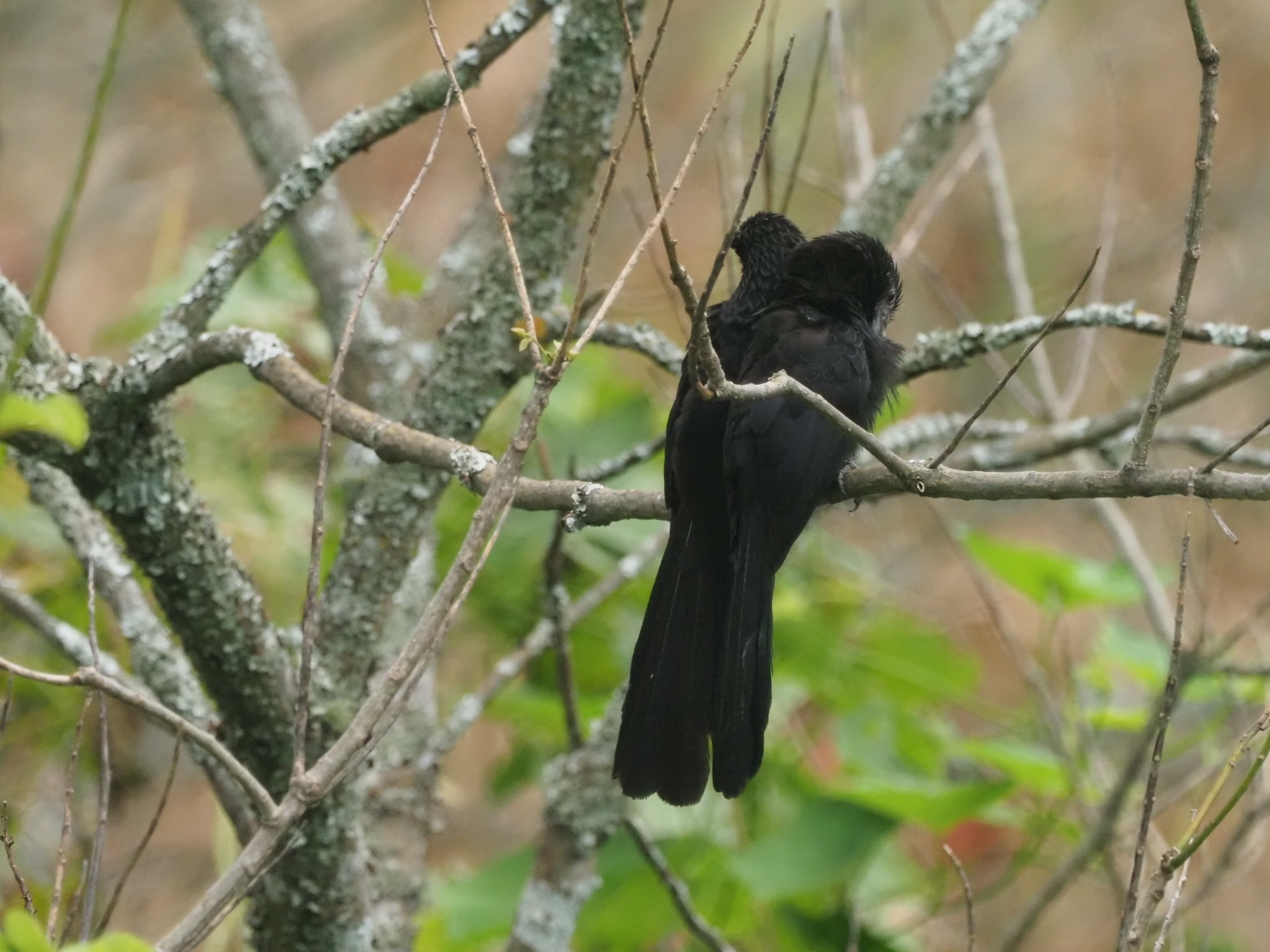
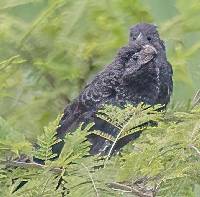
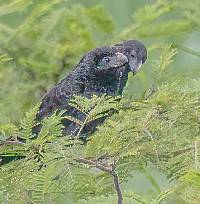
The smooth-billed ani (Crotophaga ani) is a bird in the cuckoo family. It is a resident breeding species from southern Florida, the Caribbean, parts of Central America, south to western Ecuador, Brazil, northern Argentina and southern Chile. It was introduced to Galápagos around the 1960s and is potentially impacting native and endemic species across the archipelago.
Taxonomy
Skeleton
The smooth-billed ani was described and illustrated in 1648 by the German naturalist Georg Marcgrave in his Historia Naturalis Brasiliae. He used the name "Ani" but did not explain the origin of the word. It probably comes from the word Anim in the Tupi language which means "social bird". In 1756 the Irish physician Patrick Browne used the name Crotophaga for the species in his The Civil and Natural History of Jamaica. Browne's name combines the Ancient Greek krotōn meaning "tick" with -phagos meaning "-eating". Browne wrote that the smooth-billed anis "live chiefly upon ticks and other small vermin; and may be frequently seen jumping about all cows and oxen in the fields". When the Swedish naturalist Carl Linnaeus updated his Systema Naturae for the tenth edition in 1758 he included the smooth-billed ani. He placed it in its own genus Crotophaga and coined the binomial name Crotophaga ani. The type locality is Jamaica. The species is monotypic: no subspecies are recognised.
Description
In Panama
The smooth-billed ani is a mid-sized species, larger on average than the groove-billed ani but smaller than the greater ani. It measures approximately 35 cm (14 in) in overall length. Males weigh around 115 g (4.1 oz) while females are lighter and with a weight of around 95 g (3.4 oz). The adult is mainly glossy black, with a long tail, deep ridged black bill and a brown iris. The flight is weak and wobbly, but the bird runs well and usually feeds on the ground. This species is called "el pijul" in Venezuelan folklore. The calls include a whining ooo-leeek.