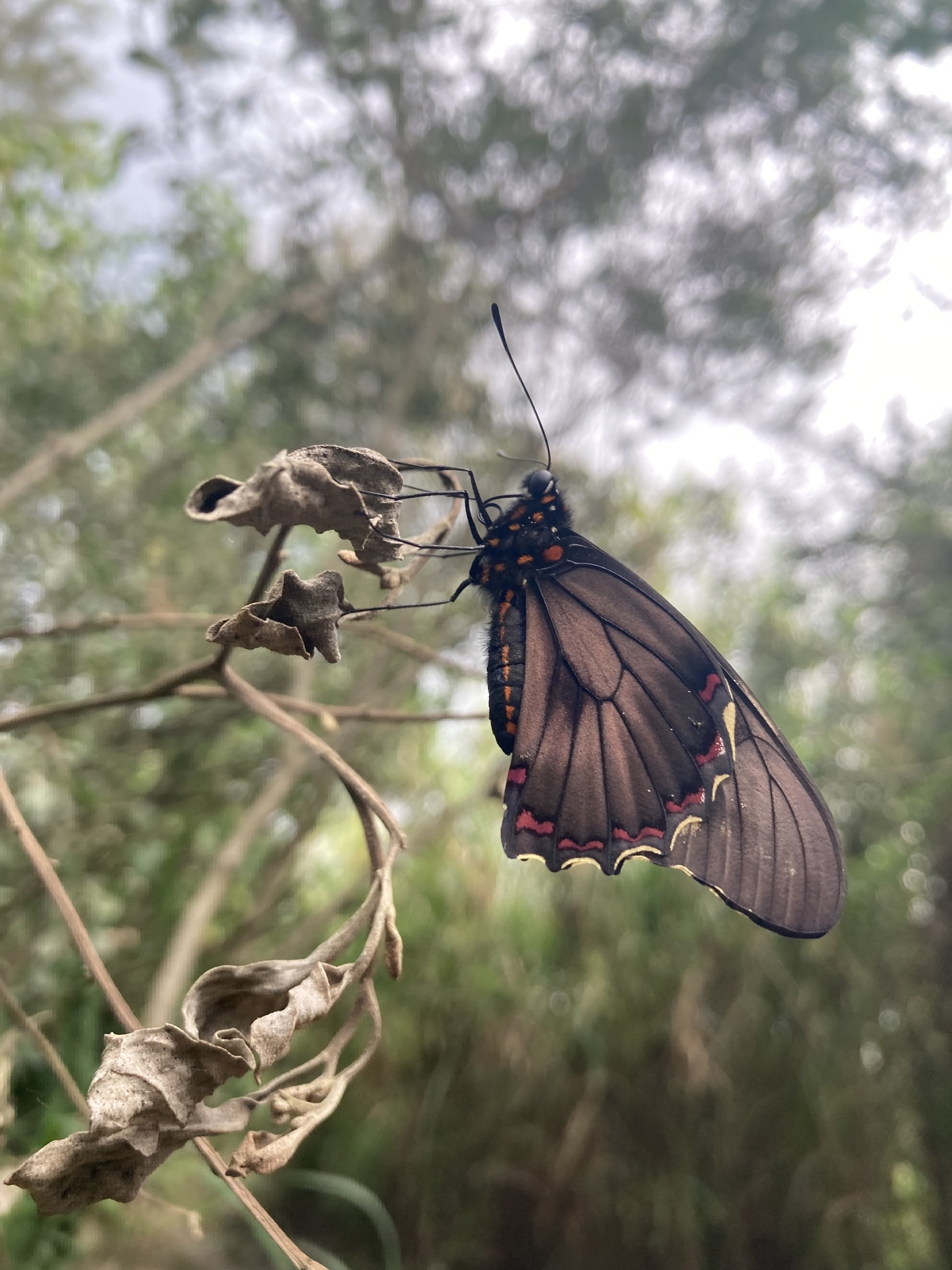
Swallowtail butterflies are large, colorful butterflies in the family Papilionidae, and include over 550 species. Though the majority are tropical, members of the family inhabit every continent except Antarctica. The family includes the largest butterflies in the world, the birdwing butterflies of the genus Ornithoptera.
Swallowtails have a number of distinctive features; for example, the papilionid caterpillar bears a repugnatorial organ called the osmeterium on its prothorax. The osmeterium normally remains hidden, but when threatened, the larva turns it outward through a transverse dorsal groove by inflating it with fluid.
The forked appearance in some of the swallowtails' hindwings, which can be seen when the butterfly is resting with its wings spread, gave rise to the common name "swallowtail". As for its formal name, Linnaeus chose Papilio for the type genus, as papilio is Latin for "butterfly". For the specific epithets of the genus, Linnaeus applied the names of Greek figures to the swallowtails. The type species: Papilio machaon honored Machaon, one of the sons of Asclepius, mentioned in the Iliad. Further, the species Papilio homerus is named after the Greek poet, Homer.
The mon of the Taira clan of Japan is an agehachō (swallowtail butterfly).
Taxonomy
The genera of extant swallowtails are usually classified into three subfamilies, Baroniinae, Parnassiinae, and Papilioninae, the latter two being further divided into tribes. In swallowtails, besides morphological characteristics, the choice of food plants and ecological lifestyles reflect phylogeny and classification.
Baroniinae is a monotypic subfamily, restricted to a very small region in Mexico and are considered to be the most basal of the subfamilies. Baronia brevicornis is considered to be a relict species, and it shares features with a fossil taxon Praepapilio. Baronia is unique among Papilionidae as having a Vachellia species (family Fabaceae) as its food plant.