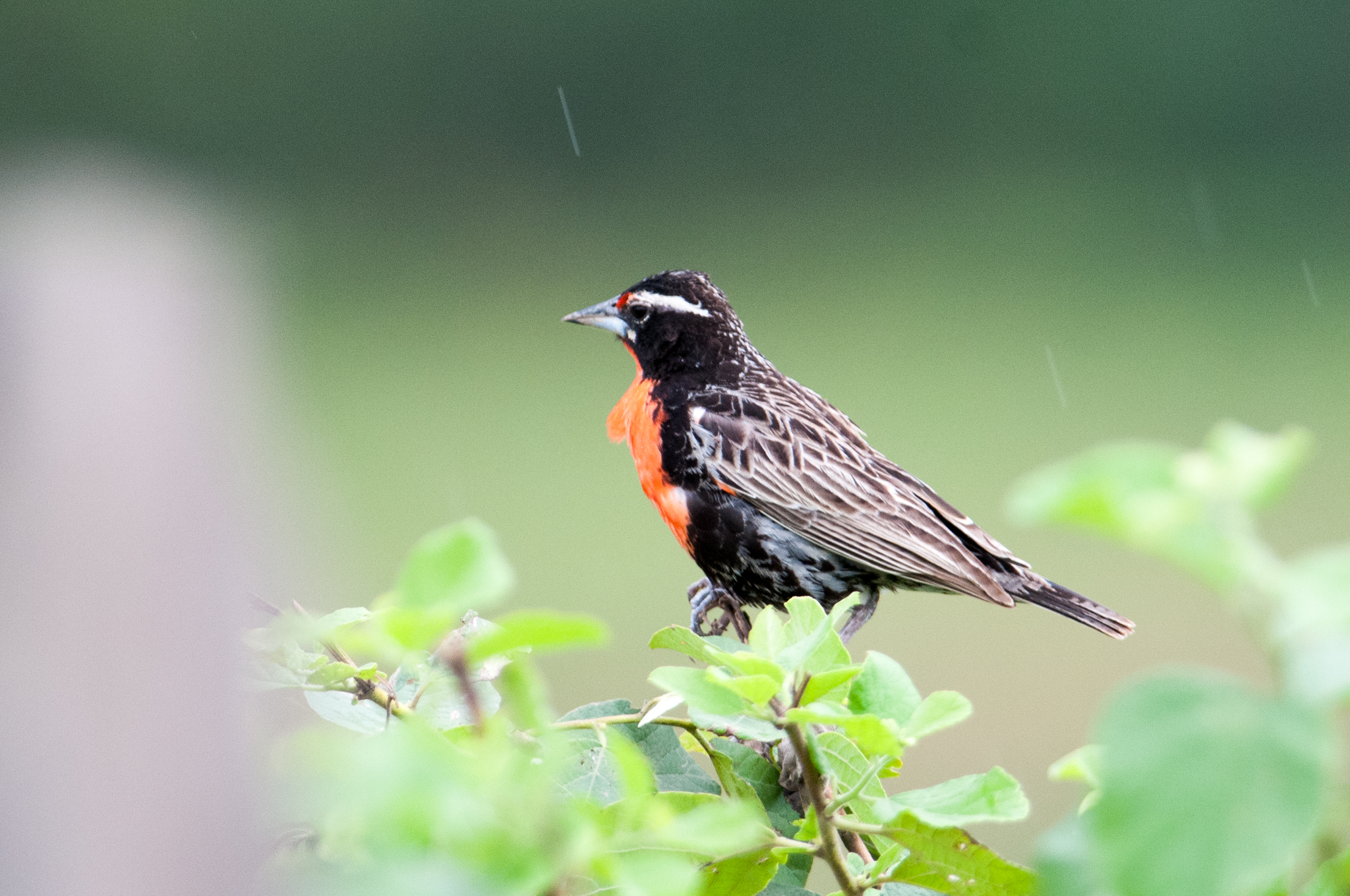
Icterids () or New World blackbirds make up a family, the Icteridae (), of small to medium-sized, often colorful, New World passerine birds. The family contains 108 species and is divided into 30 genera. Most species have black as a predominant plumage color, often enlivened by yellow, orange, or red. The species in the family vary widely in size, shape, behavior, and coloration.
Etymology
The name, meaning "jaundiced ones" (from the prominent yellow feathers of many species) comes from the Ancient Greek: ἴκτερος - íkteros via the Latin: ictericus.
This group includes the New World blackbirds, New World orioles, the bobolink, meadowlarks, grackles, cowbirds, oropendolas, and caciques.
Despite the similar names, the first groups are only distantly related to the Old World common blackbird (a thrush) or to the Old World orioles.
The Icteridae are not to be confused with the Icteriidae, a family created in 2017 and consisting of one species — the yellow-breasted chat (Icteria virens).
Relationship to other species
This group includes the New World blackbirds, New World orioles, the bobolink, meadowlarks, grackles, cowbirds, oropendolas, and caciques.
Despite the similar names, the first groups are only distantly related to the Old World common blackbird (a thrush) or to the Old World orioles.
The Icteridae are not to be confused with the Icteriidae, a family created in 2017 and consisting of one species — the yellow-breasted chat (Icteria virens).
Characteristics
Most icterid species live in the tropics, although many species also occur in temperate regions, such as the red-winged blackbird and the long-tailed meadowlark. The highest densities of breeding species are found in Colombia and southern Mexico. They inhabit a range of habitats, including scrub, swamp, forest, and savanna. Temperate species are migratory, with many species that nest in the United States and Canada moving south into Mexico and Central America.
Breeding male Brewer's blackbird apparently gaping (see text)...