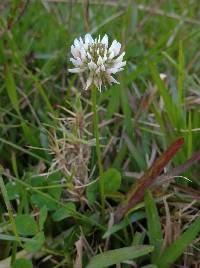
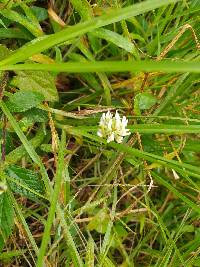
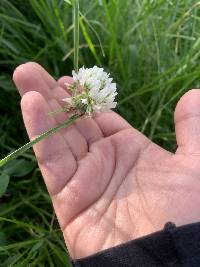
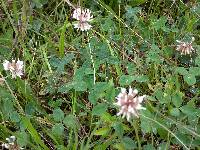
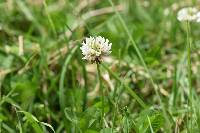
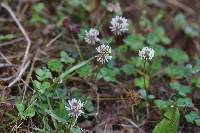
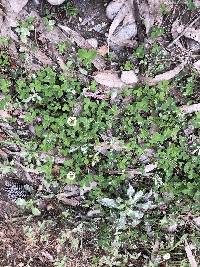
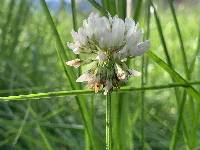
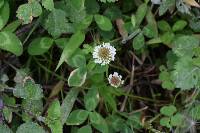
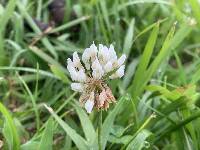
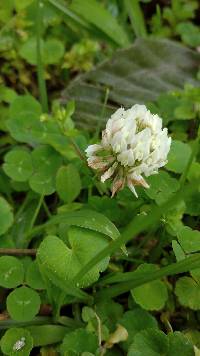
Trifolium repens, the white clover, is a herbaceous perennial plant in the bean family, Fabaceae (also known as Leguminosae).
The species is native to Eurasia and is one of the most widely cultivated types of clover. It has been widely introduced worldwide as a forage crop, and is now also common in most grassy areas of North and South America, Australia and New Zealand.
Description
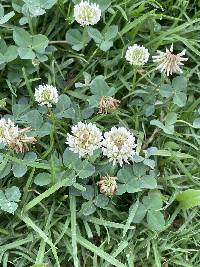
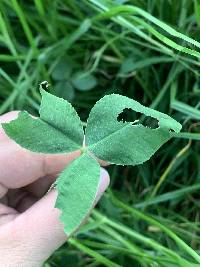
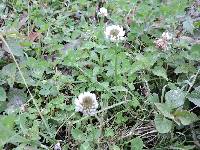
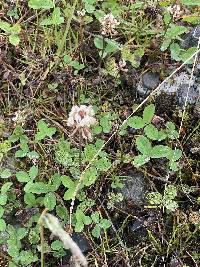
It is a low-growing herbaceous, perennial plant. The leaves are trifoliolate, smooth, elliptic to egg-shaped, long-petioled, and usually with light or dark markings. The stems function as stolons, so white clover often forms mats, with the stems creeping as much as 18 centimetres (7 in) a year, and rooting at the nodes. The leaves form the symbol known as shamrock. Almost always, a white clover will be trifoliolate (have three leaflets). However, one can, but only sometimes, possess four or more leaflets. The species includes varieties often classed as small, intermediate and large, according to height, which reflects petiole length.
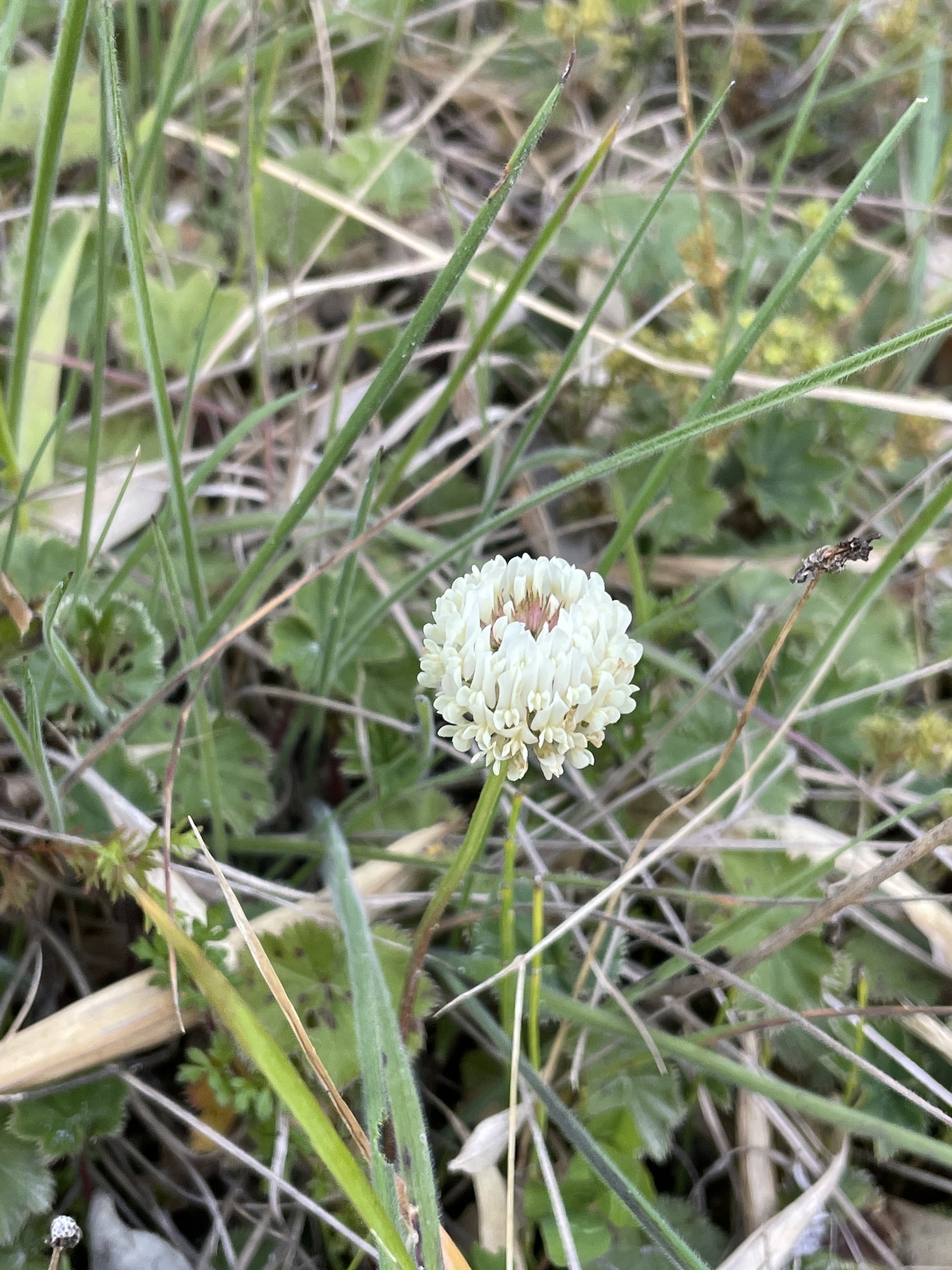
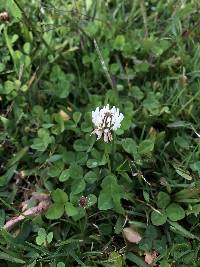
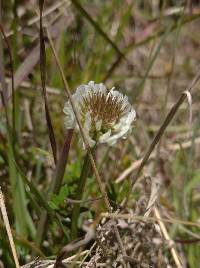
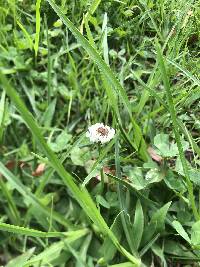
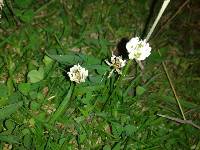
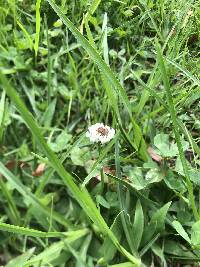
It produces flowering heads of whitish florets, often with a tinge of pink or cream that may come on with the aging of the plant. The heads are generally
White clover spreads vegetatively through creeping above-ground stems known as stolons, which form adventitious roots at their nodes.
@media all and (max-width:720px){
Leaf
Flowering
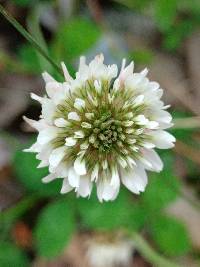
Flower close-up
Four-leaf specimen
Taxonomy
Botanical illustration
Trifolium repens is an allotetraploid (2n = 4x = 32) of two diploid ancestors and exhibits disomic inheritance. In order to increase genetic diversity for breeding, research is focused on finding these ancestors. Proposed ancestors of T. repens include T. nigrescens, T. occidentale, T. pallescens, and T. uniflorum. Additionally, it is possible that one of the diploid ancestors has yet to be analyzed, either because it has not been discovered or is extinct.