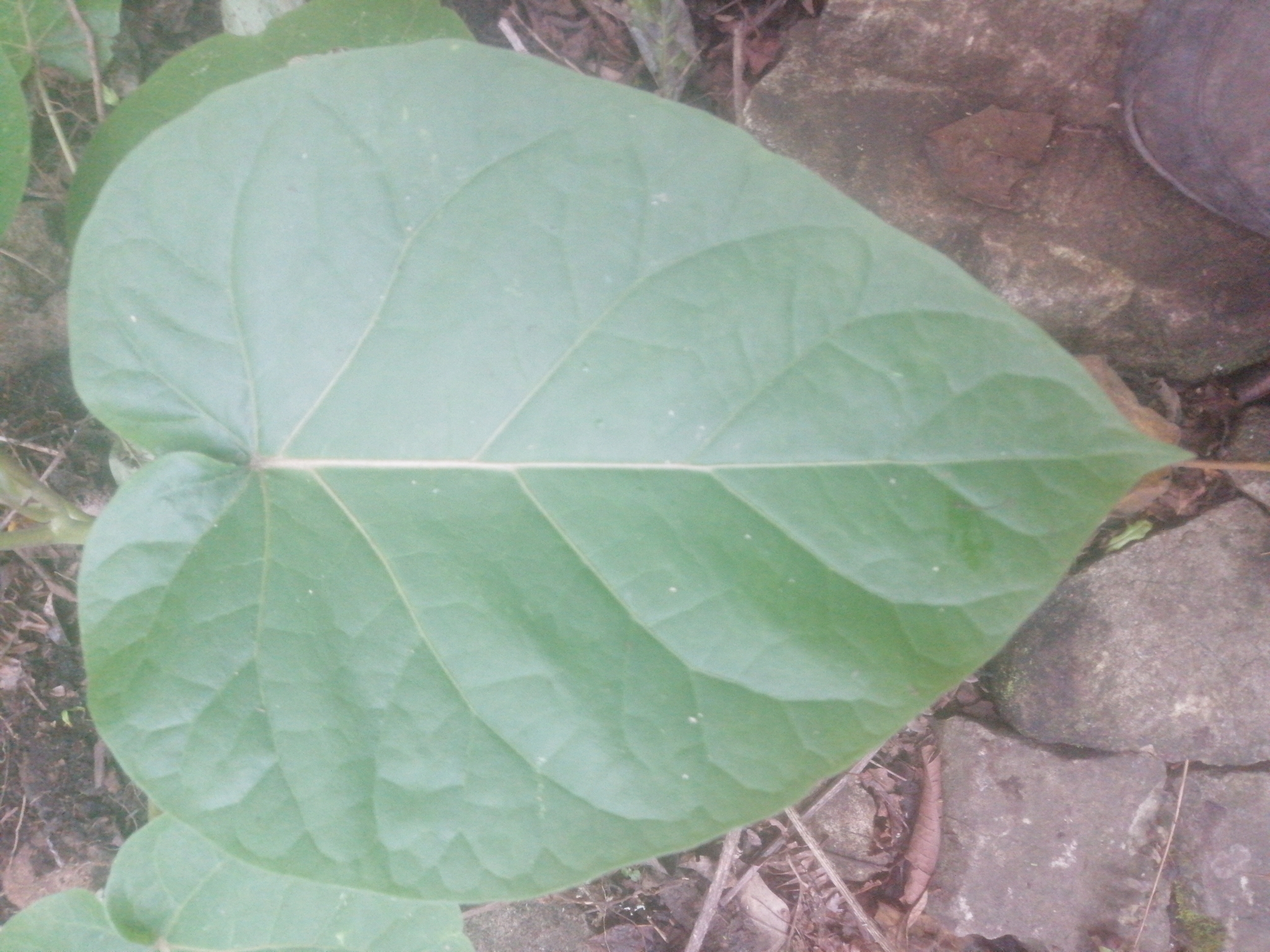
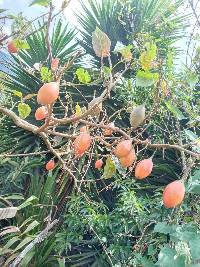
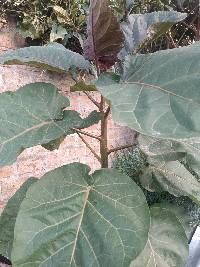
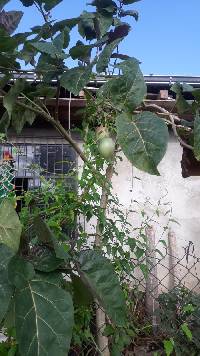
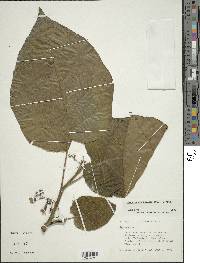
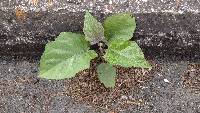
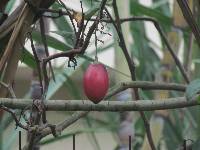
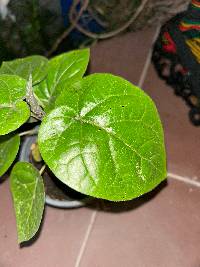
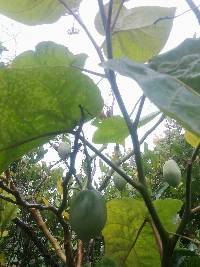
The tamarillo (Solanum betaceum) is a tree or shrub in the flowering plant family Solanaceae (the nightshade family). It bears an egg-shaped edible fruit. It is common globally, especially in its native South America (as the Quechuan chilltu in Peru, Colombia, and Ecuador, or as tomate andino in other Andean countries), and has been introduced in New Zealand, Nepal, Rwanda, Burundi, the Democratic Republic of the Congo, Australia, Indonesia, Madeira and Bhutan.
Naming
In 1966, the New Zealand Tree Tomato Promotions Council sought to coin a new name for the fruit, after growers suspected that the name 'tree tomato' was hindering export market potential for the crop, due to confusion around how the fruit was eaten and how similar it was to garden tomatoes. The council found none of the pre-existing names across South America to be suitable, wanting a name that sounded subtropical, appealing, and easy to pronounce and spell in different languages. The name tamarillo was proposed as a sort of pseudo-Hispanicism influenced by the name of the crop tomatillo (both related in the nightshade family), but with an added Māori (thus presentably 'native') element after Tama-te-kapua, captain of the Arawa migration canoe. Growers overwhelmingly voted for the change, and from February 1967 the name came into wide usage across New Zealand. The name 'tamarillo' is not universally used, and this plant has a different name in many regions.
It is also known as the tree tomato, tomate de árbol, tomate andino, tomate serrano, blood fruit, poor man's tomato, tomate de yuca, tomate de españa, sachatomate, berenjena, chilto (from Quechua: chilltu) and tamamoro in South America, tyamtar, rambheda or rukh tamatar (lit. tree tomatoes) in Nepal, and terong Belanda (Dutch eggplant) in Indonesia.
Description
Flower cluster
The plant is a fast-growing tree that grows up to 5 metres (16 ft). Peak production is reached after 4 years, and the life expectancy is about 5 to 12 years. The tree...