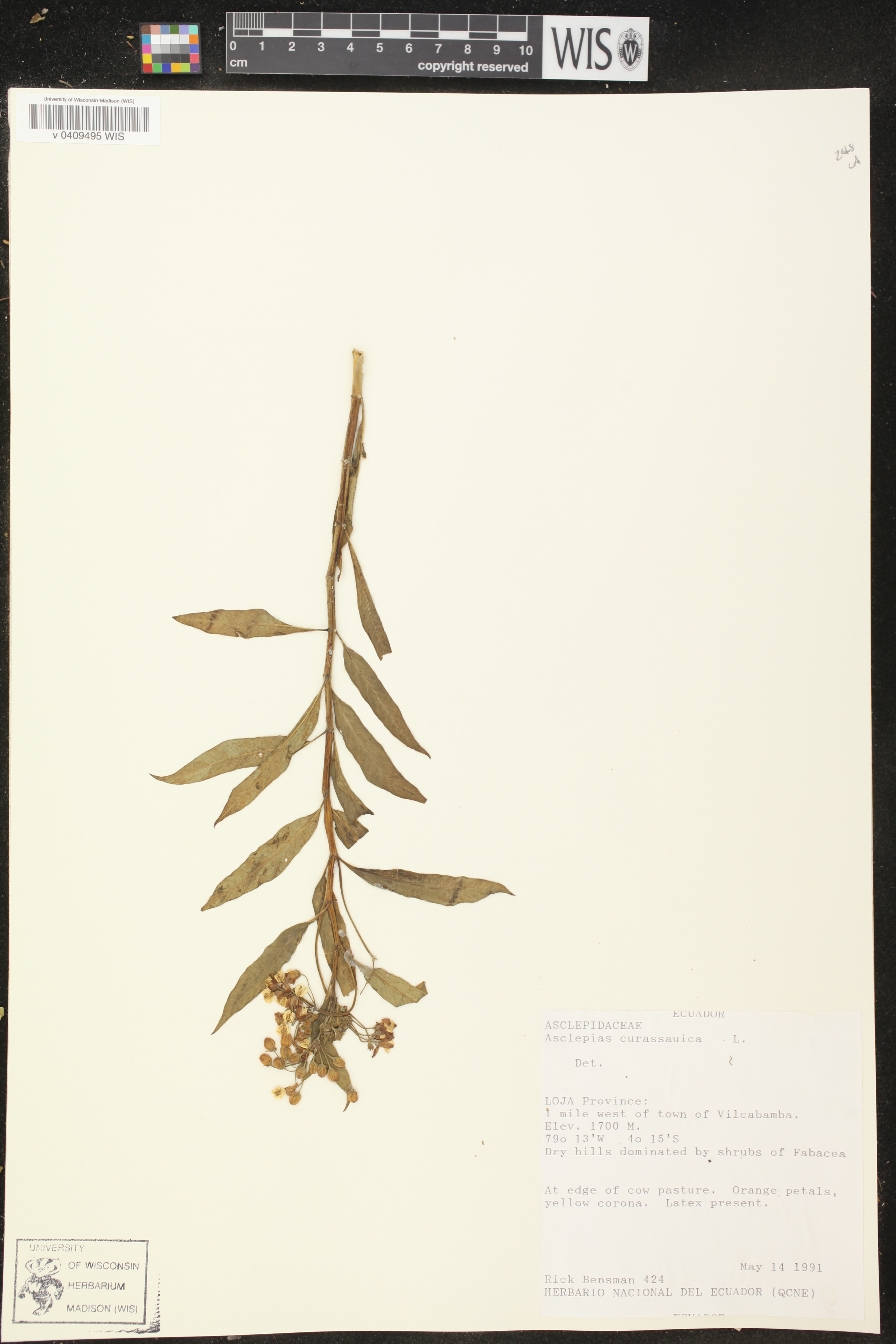
Asclepias is a genus of herbaceous, perennial, flowering plants known as milkweeds, named for their latex, a milky substance containing cardiac glycosides termed cardenolides, exuded where cells are damaged. Most species are toxic to humans and many other species, primarily due to the presence of cardenolides. However, as with many such plants, some species feed upon milkweed leaves or the nectar from their flowers. A noteworthy feeder on milkweeds is the monarch butterfly, which uses and requires certain milkweeds as host plants for its larvae.
The Asclepias genus contains over 200 species distributed broadly across Africa, North America, and South America. It previously belonged to the family Asclepiadaceae, which is now classified as the subfamily Asclepiadoideae of the dogbane family, Apocynaceae.
Etymology
In the first century AD, Dioscorides described a plant called ἀσκληπιάς (asklepias) in Greek and Pliny the Elder described a plant called asclepias in Latin. Though usually explained as being derived from the name of the Greek medical god Asklepios, neither author mentioned the god in connection with this plant. Their plant has since been commonly identified as the plant now known as Vincetoxicum hirundinaria. Some botanists have disagreed as, though the old descriptions are short and vague, Vincetoxicum hirundinaria does not have leaves like ivy.
Linnaeus first described the genus Asclepias in his Genera Plantarum of 1737 without specifying any particular plants in the genus. Linnaeus published his Flora Suecica in 1745 and Materia Medica in 1749. The only Asclepias he mentioned in either book was the one he would later name as Asclepias vincetoxicum. Both books mentioned that in pharmacy this plant was called Hirundinariæ. In none of his works does Linnaeus give an origin for the name Asclepias, presumably because it was being used for these plants by some herbalists and botanists for centuries before. These publications were before his 1753...