Senna didymobotrya is a species of flowering plant in the legume family known by the common names African senna, popcorn senna, candelabra tree, and peanut butter cassia. It is native to Africa, where it can be found across the continent in several types of habitats.
It has been introduced to many other parts of the world for use as an ornamental plant, a cover crop, and a leguminous green manure. In some places it is now naturalized in the wild, for example, in parts of Indonesia, Australia, Mexico, and the United States in California, Florida, and Hawaii.
Description
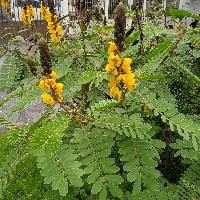
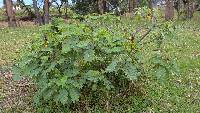
African senna is a hairy, aromatic shrub usually growing up to about five meters tall but known to reach nine meters in optimal growing conditions. The leaves of the plant are up to half a meter long and are made up of many pairs of elongated oval leaflets each up to 6.5 centimeters long.
The African senna plant has a strong, distinct scent that has been variously described as being reminiscent of mice, wet dog, peanut butter, and burnt popcorn.
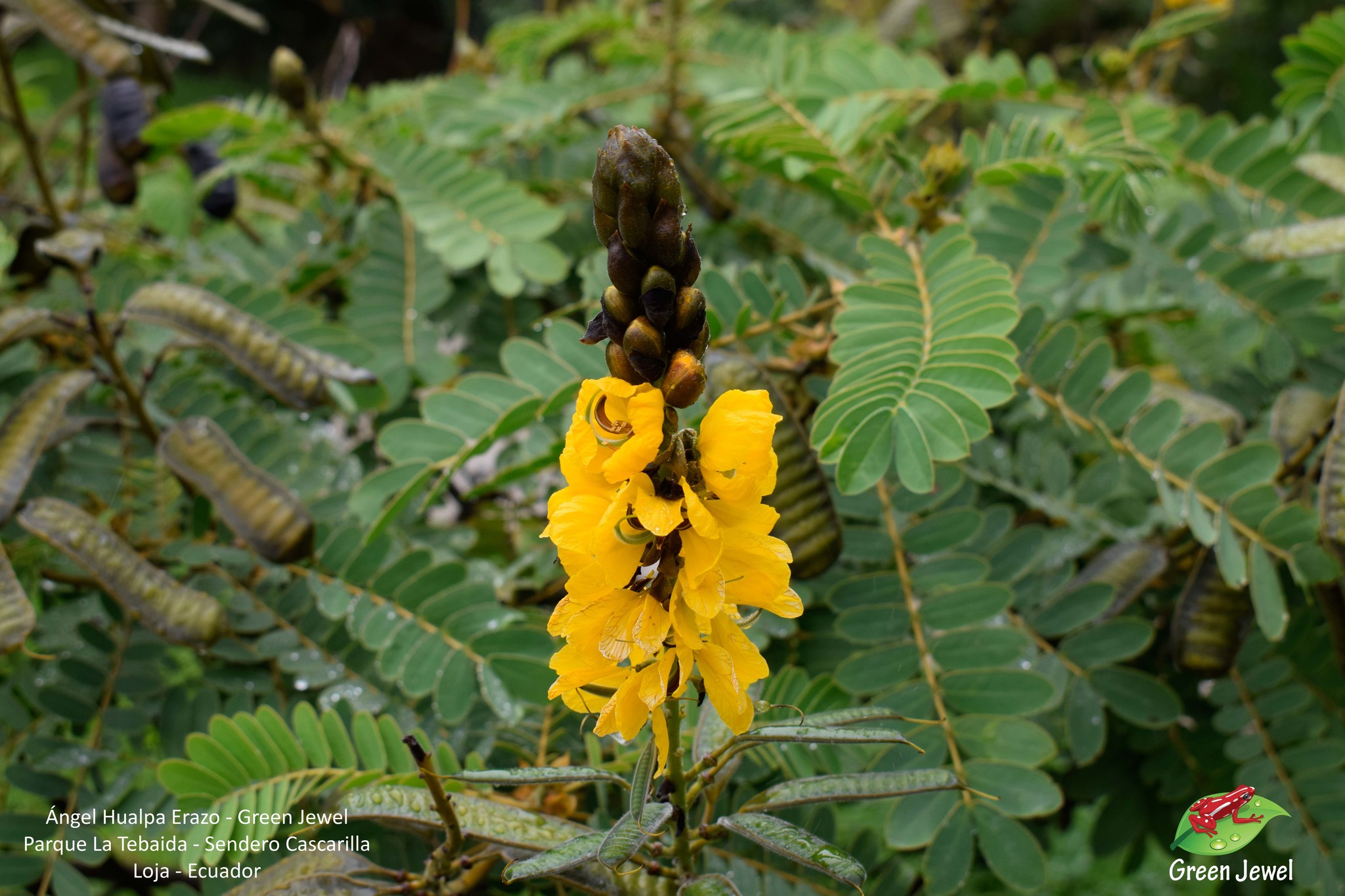
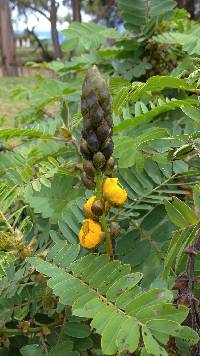
The plant flowers plentifully in racemes of bright yellow flowers, with some flowers also occurring in leaf axils. The flower raceme has open flowers on the lower part with unopened buds at the tip covered in stark brownish green or black bracts. The flower has five concave petals each 1.5 to nearly 3 centimeters long. The flower has ten stamens, usually seven fertile ones and three sterile staminodes. Some of the stamens have large anthers measuring a centimeter long.
The fruits of the African senna plant are flat brown legume pods up to 12 centimeters long, each containing as many as 16 bean-like seeds that are themselves up to a centimeter long each.