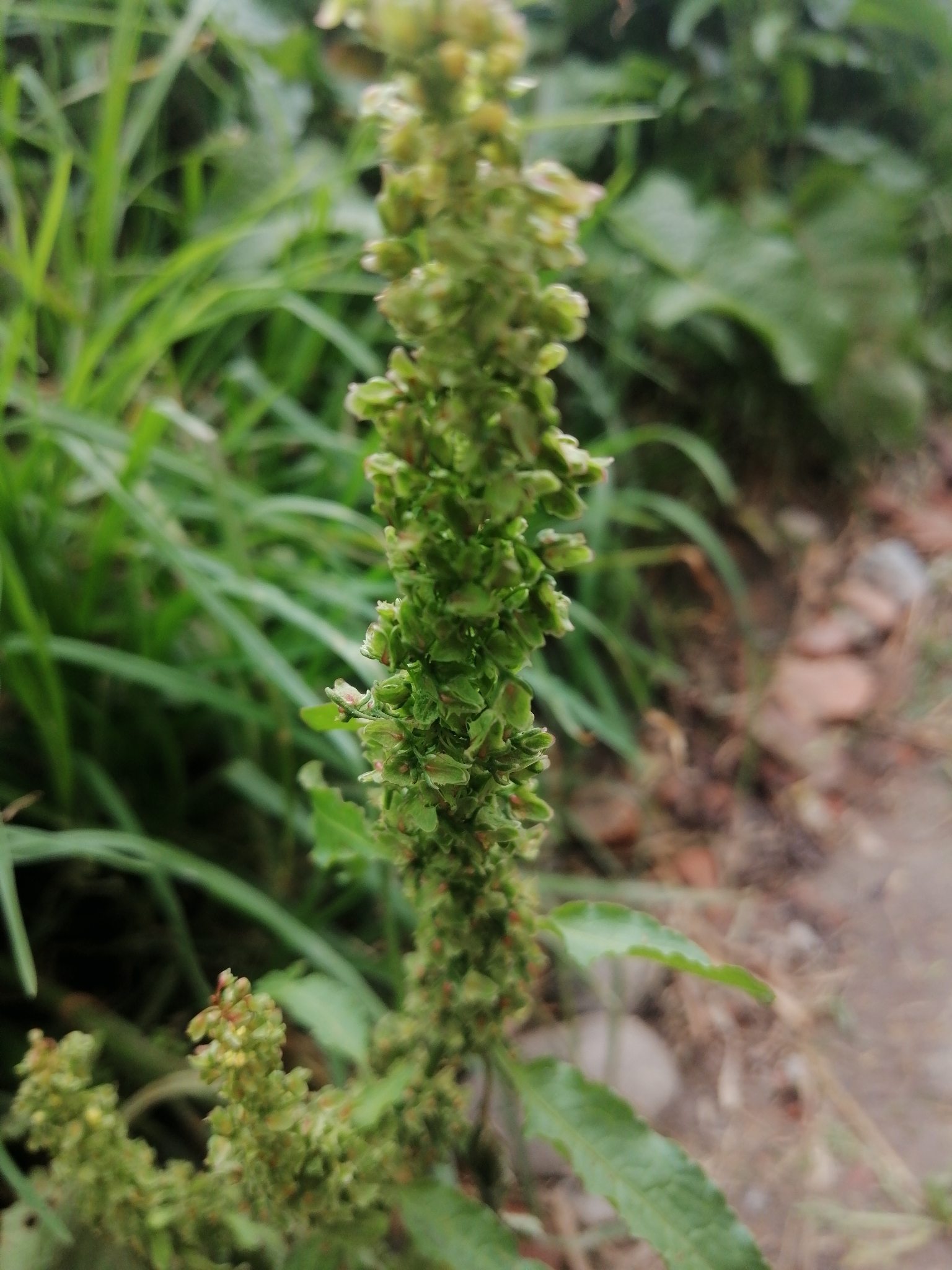
Rumex obtusifolius, commonly known as bitter dock, broad-leaved dock, bluntleaf dock, dock leaf, dockens or butter dock, is a perennial plant in the family Polygonaceae. It is native to Europe, but is found on all temperate continents. It is a highly invasive species in some zones, resulting from its abundant seed dispersal, adaptability to reproduce, aggressive roots, ability to tolerate extreme climates, and hardiness.
Etymology
The name, Rumex obtusifolius, was assigned by Carl Linnaeus in the 18th century, and has remained unchanged, although there are numerous subspecies. Rumex was Pliny's name for sorrel, while obtusifolius means 'obtuse-leaved' (obtuse + foliage).
Botanical illustration of Rumex obtusifolius
Description
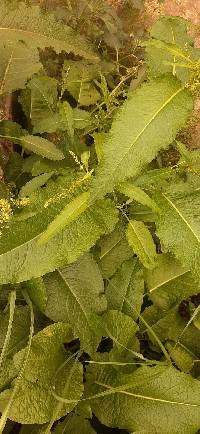
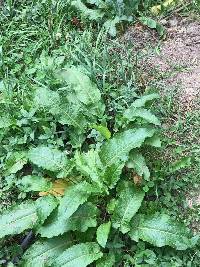
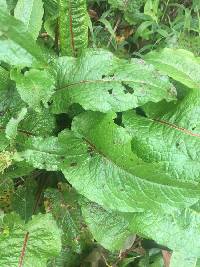
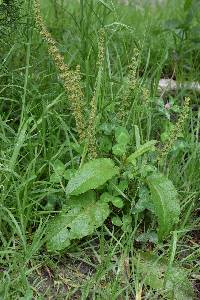
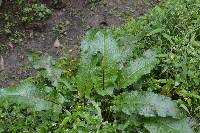
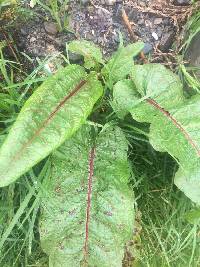
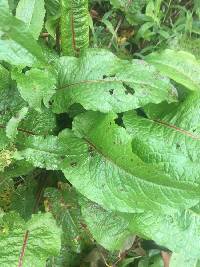
Rumex obtusifolius is a perennial herbaceous flowering plant that grows to a height of 40 to 150 cm (16 to 59 in). It is easily recognizable by its very large oval leaves with cordate bases and rounded tips, some of the lower leaves having red stems. The edges of the leaves are slightly "crisped" or wavy, the upper surface is hairless and the under surface may be papillose. The leaves of this plant can grow to about 30 cm (12 in) in length and 15 centimetres (5.9 in) wide. The taproot is large, with numerous branches extending to a depth of 150 centimetres (59 in), with tough stems, often reddish, and unbranched until just below the inflorescence.
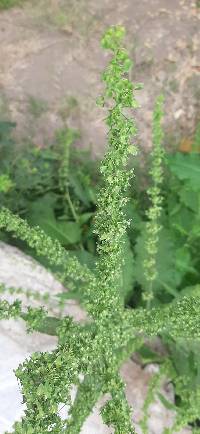
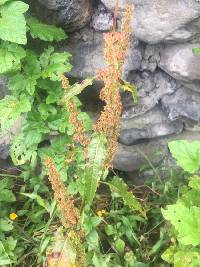
The junctions of the petioles with the stems are covered by a sheath formed by two fused stipules known as an ocrea, a thin, paper-like membrane – a characteristic of the family Polygonaceae. The stem leaves are alternate and are narrowly ovate–lanceolate. The inflorescence consists of large clusters of racemes which contain small greenish flowers that change to red as they mature. The perianth-segments are in two whorls of three. Segments in the outer whorl are small and spreading while the inner whorl forms fruit valves, which are widely ovately-triangular. The seeds...