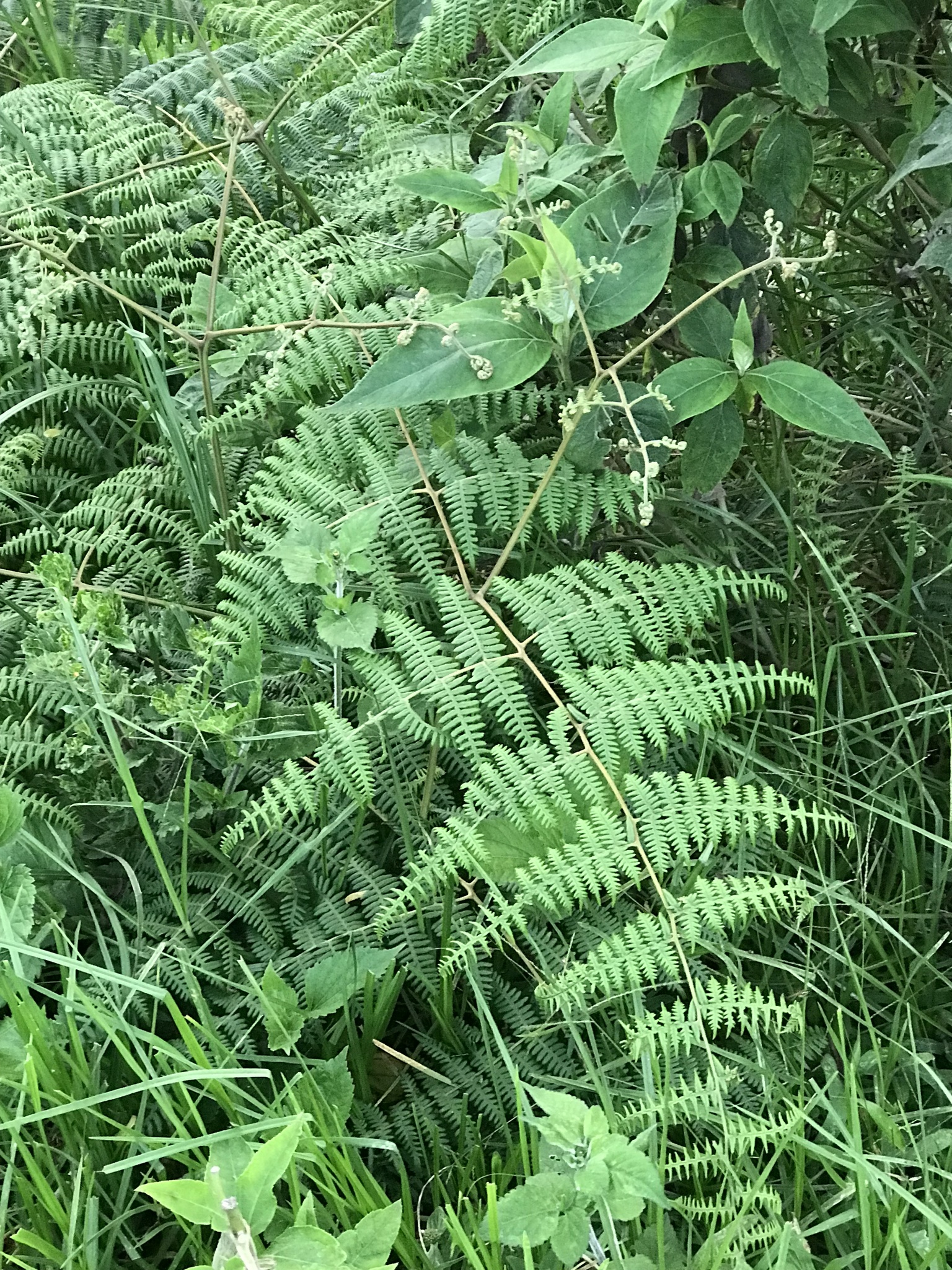
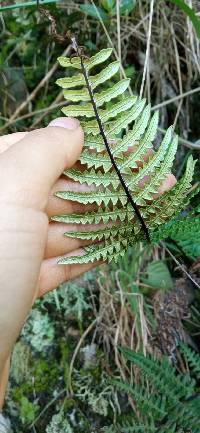
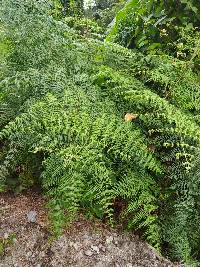
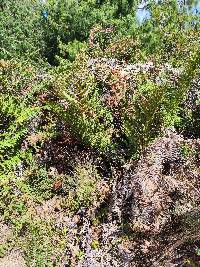
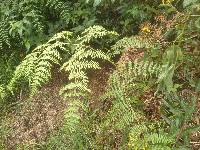
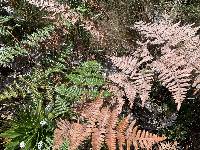
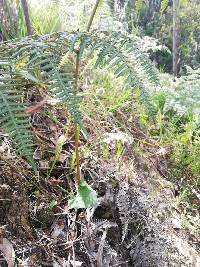
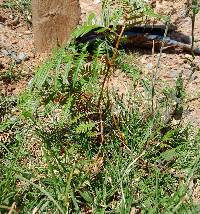
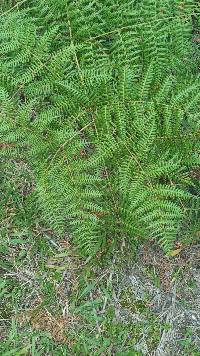
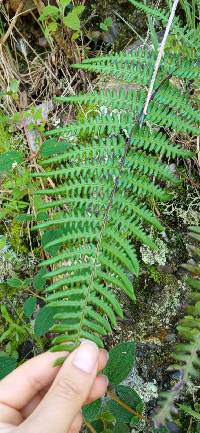
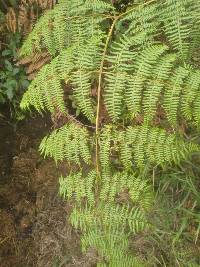
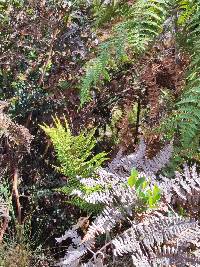
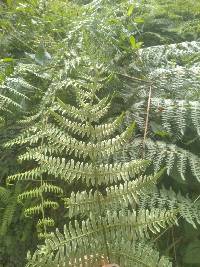
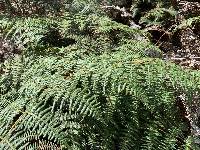
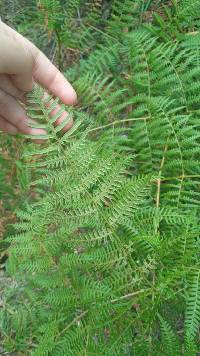
Pteridium esculentum, commonly known as bracken fern, austral bracken or simply bracken, is a species of the bracken genus native to a number of countries in the Southern Hemisphere. Although it is now known to contain the carcinogen ptaquiloside, the rhizome of the plant was a staple in traditional Māori diets in New Zealand and was eaten by Indigenous Australians.
Description
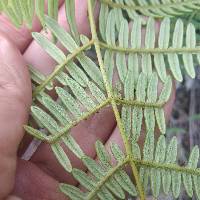
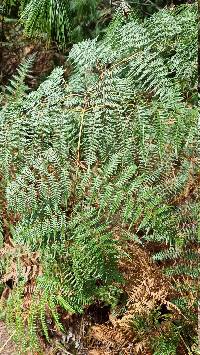
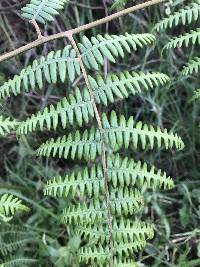
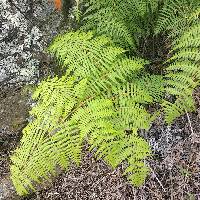
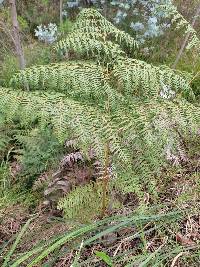
Pteridium esculentum grows from creeping rhizomes, which are covered with reddish hair. From them arise single large roughly triangular fronds, which grow to 0.5–2 metres (1 ft 8 in – 6 ft 7 in) tall. The fronds are stiff with a brown stripe.
Taxonomy
First described as Pteris esculenta by German botanist Georg Forster in 1786, it gained its current binomial name in 1908. Esculentum means edible.
Distribution and habitat
It is found in all states of Australia apart from the Northern Territory, as well as New Zealand, Norfolk Island, Malaysia, Polynesia, and New Caledonia. Within Victoria it is widespread and common to altitudes of 1,000 m (3,300 ft). In New South Wales, it occurs across central, eastern and southern parts of the state. It can also be weedy and invade disturbed areas. In Western Australia, it grows near the southern and western coastlines, as far north as Geraldton. In Queensland, it is found in many locations.
Ecology
Like its Northern Hemisphere relatives, P. esculentum is very quick to colonise disturbed areas and can outcompete other plants to form a dense understorey. It is often treated as a weed. It does create a more humid sheltered microclimate under its leaves and is food for a variety of native insects. Two species of fruit fly (Drosophila) were recorded in a field study near Sydney. Another study near Sydney yielded 17 herbivorous arthropods (15 insects and two mites), notable for the lack of Hymenoptera (ants, bees, wasps, and sawflies) and beetles.
Adverse health impacts
Pteridium esculentum contains the known bracken carcinogen ptaquiloside. Concentrations of...