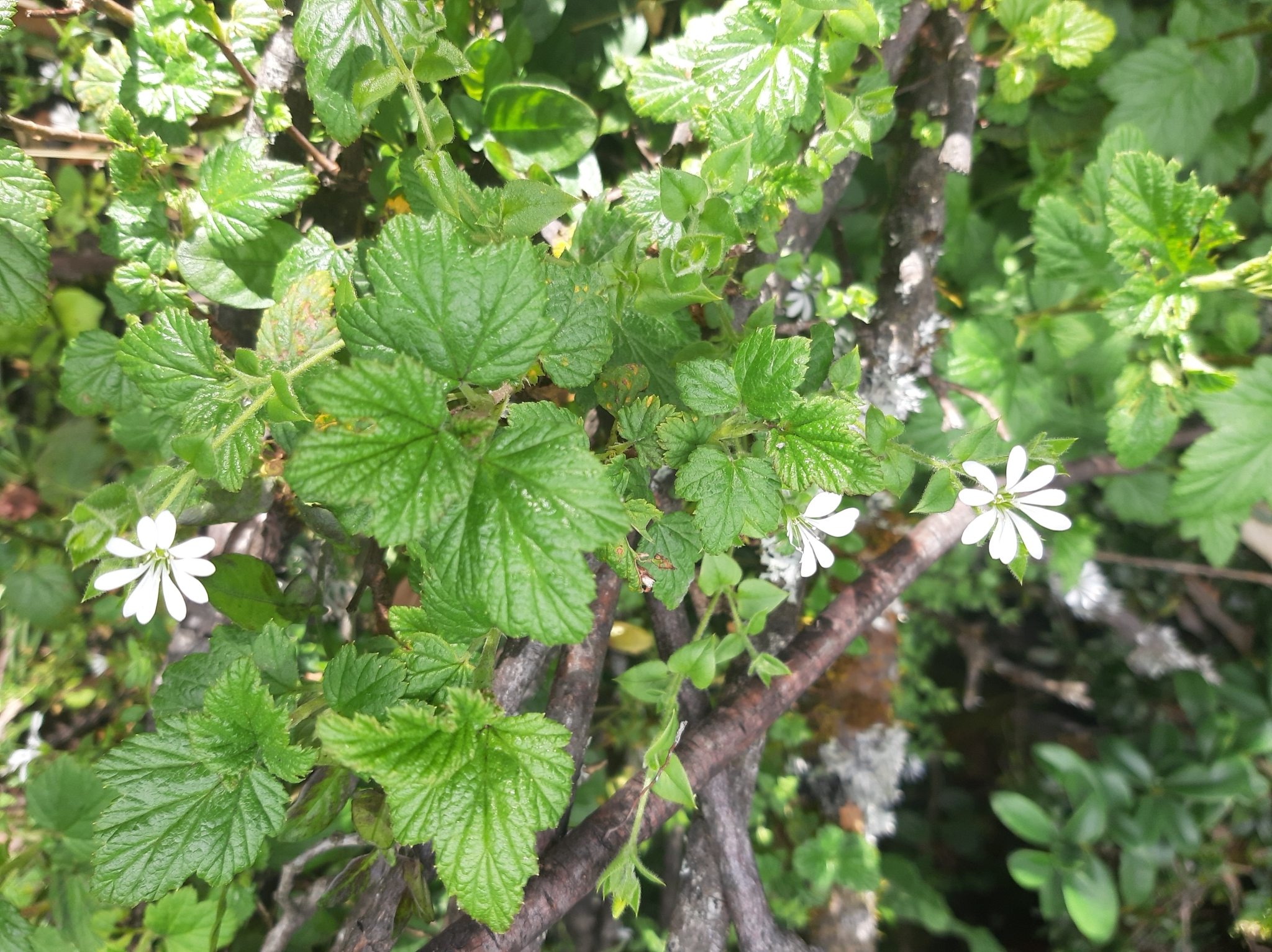
Caryophyllaceae, commonly called the pink family or carnation family, is a family of flowering plants. It is included in the eudicot order Caryophyllales in the APG III system, alongside 33 other families, including Amaranthaceae, Cactaceae, and Polygonaceae. It is a large family, with 105 genera and about 2,625 known species.
This cosmopolitan family of mostly herbaceous plants is best represented in temperate climates, with a few species growing on tropical mountains. Some of the more commonly known members include pinks and carnations (Dianthus), and firepink and campions (Silene). Many species are grown as ornamental plants, and some species are widespread weeds. Most species grow in the Mediterranean and bordering regions of Europe and Asia. The number of genera and species in the Southern Hemisphere is rather small, although the family does contain Antarctic pearlwort (Colobanthus quitensis), the world's southernmost dicot, which is one of only two flowering plants found in Antarctica.
The name comes from Caryophyllus, an obsolete synonym of Dianthus.
Description
Despite its size and the somewhat doubtful mutual relationships, this family is rather uniform and easily recognizable.
Most are herbaceous annuals or perennials, dying off above ground each year. A few species are shrubs or small trees, such as some Acanthophyllum species. Most plants are non-succulent; i.e. having no fleshy stems or leaves. The nodes on the stem are swollen. The leaves are almost always opposite, rarely whorled. The blades are entire, petiolate, and often stipulate. These stipules are not sheath-forming.
The bisexual flowers are terminal, blooming singly or branched or forked in cymes. The inflorescence is usually dichasial at least in the lower parts, which means that in the axil of each peduncle (primary flower stalk) of the terminal flower in the cyme, two new single-flower branches sprout up on each side of and below the first flower. If the terminal flowers are absent,...