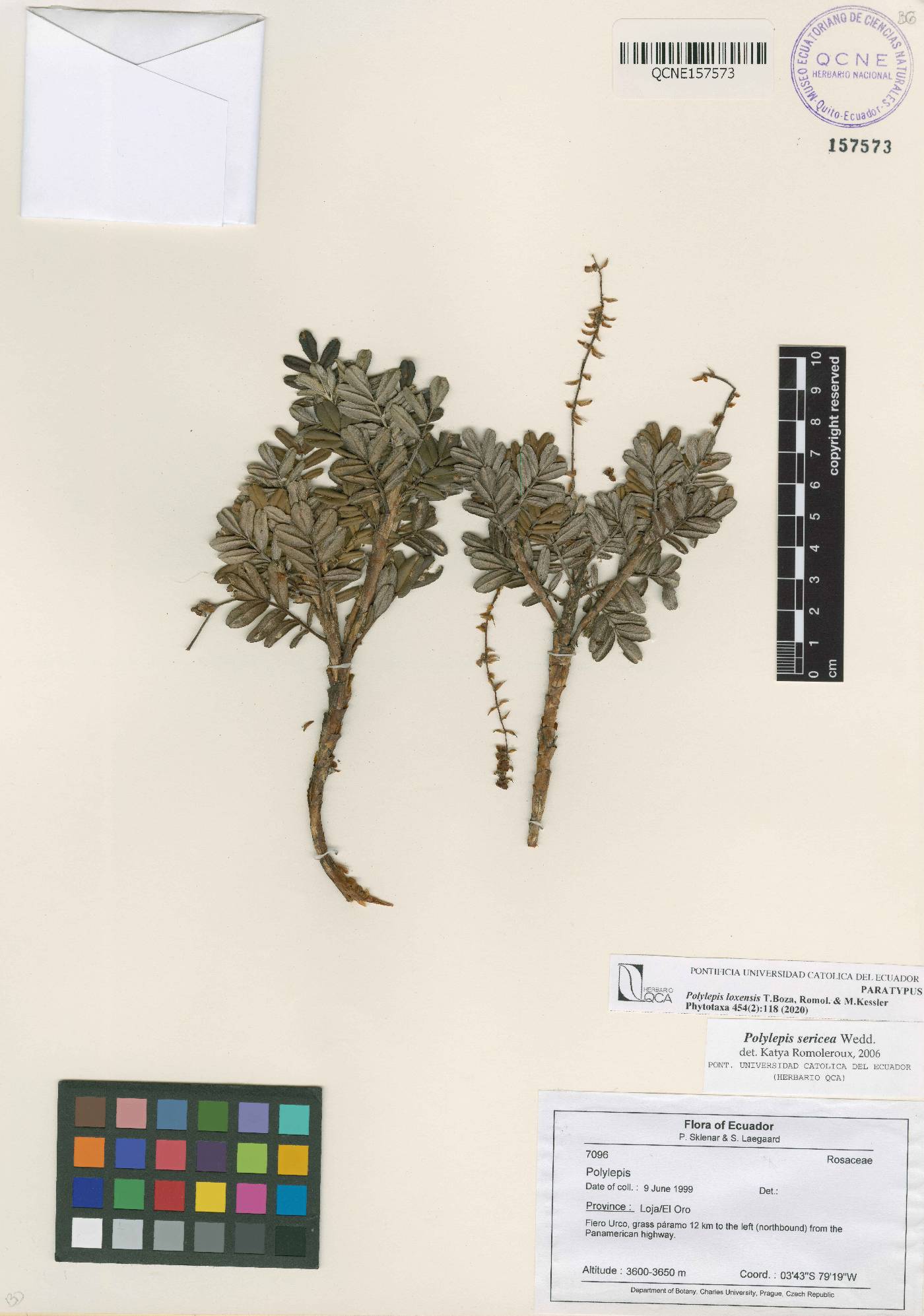
Polylepis is a genus comprising 44 recognized shrub and tree species, that are endemic to the mid- and high-elevation regions of the tropical Andes, up to 5,000 metres (16,000 ft) above sea level. It is distributed from Venezuela to Patagonia. In Peru, plants in the genus are known as queñual, queuña, or queñoa; in Bolivia, as kewiña; in Ecuador, as yagual; and in Argentina, tabaquillo.
This group is unique in the rose family in that it is predominantly wind-pollinated. They are usually gnarled in shape, but in certain areas some trees are 15–20 m tall and have 2 m-thick trunks. The foliage is evergreen, with dense small leaves, and often having large amounts of dead twigs hanging down from the underside of the canopy. The name Polylepis is, in fact, derived from the Greek words poly (many) plus lepis (scales, layers), referring to the shredding, multi-layered scaly bark that is common to all species in the genus. The bark is thick and rough and densely layered for protection against low temperatures.
Some species of Polylepis form woodlands growing well above normal tree line within grass and scrub associations at elevations over 5000 m; which makes Polylepis appear to be the highest naturally occurring woody angiosperm genus in the world.
Classification/taxonomy
The genus Polylepis contains about 44 species that are distributed across the Andes. It is in the rose family, Rosaceae. The genus belongs to the tribe Sanguisorbeae, which mainly comprises herbs and small shrubs. Although the relationship of Polylepis to other genera of Sanguisorbeae is largely unknown, the analysis of Torsten Eriksson et al. (2003) showed evidence of a close relationship between Polylepis and Acaena, which shows tendencies towards having fused stipular sheaths, reddish, flaking-off bark, and axillary, somewhat pendant inflorescences, features otherwise characteristic of Polylepis. There are several characteristics that are important taxonomically to distinguish between species of Polylepis, notably 1)...