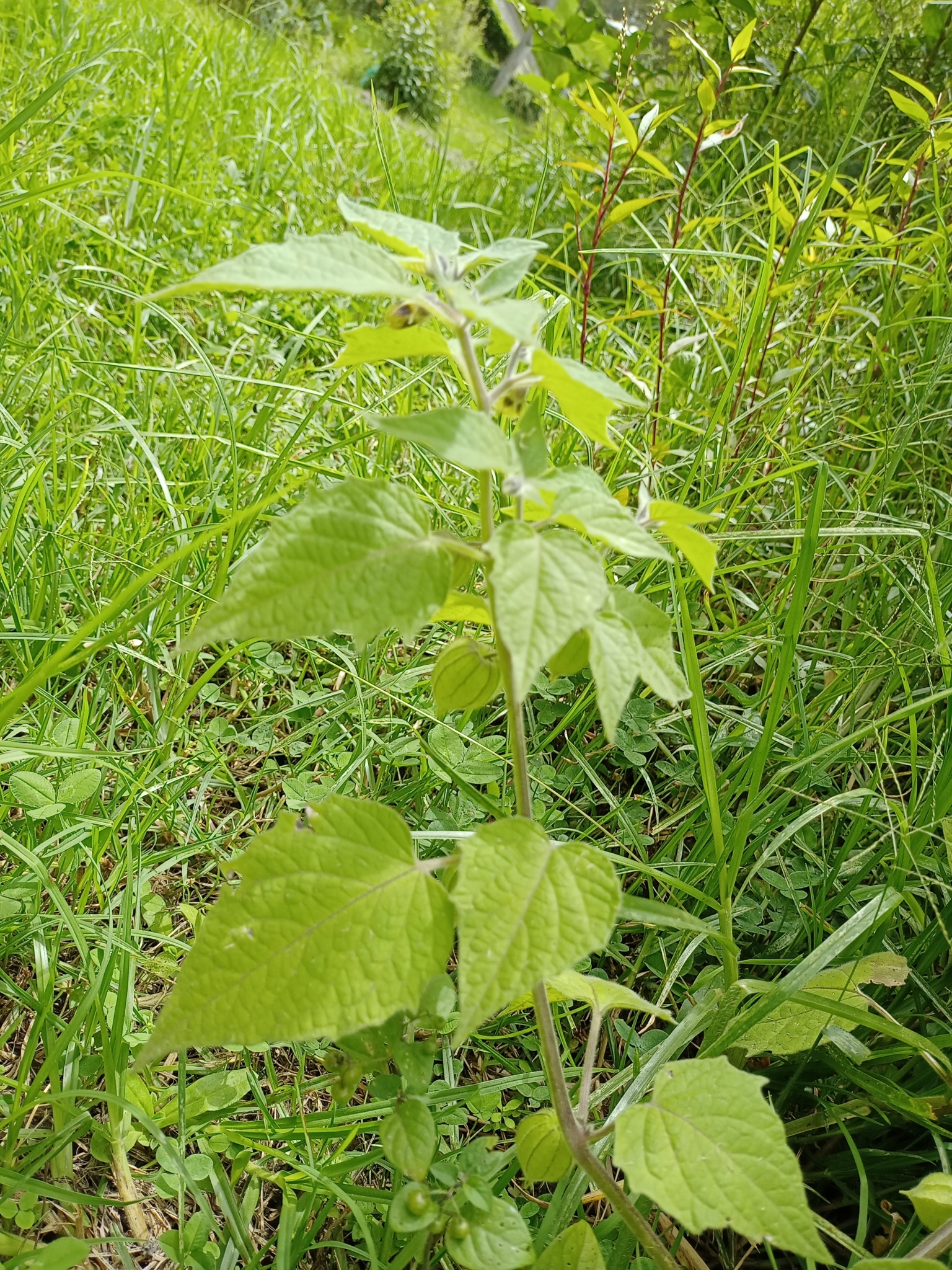
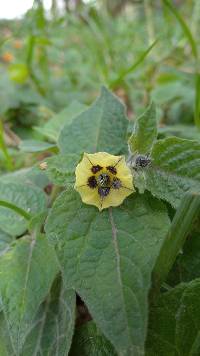
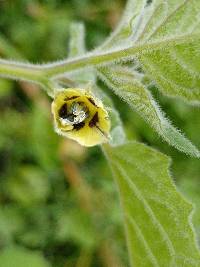
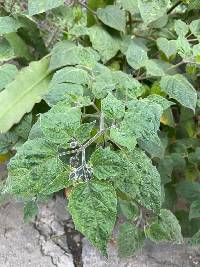
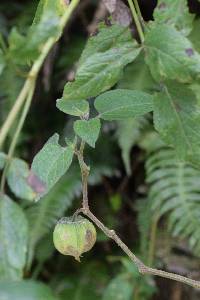
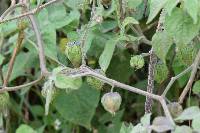
Physalis peruviana is a South American species of plant in the nightshade family (Solanaceae). Within its native range, it is called aguaymanto, uvilla or uchuva, in addition to numerous indigenous and regional names. In English, its common names include Cape gooseberry, goldenberry and Peruvian groundcherry.
The history of P. peruviana cultivation in South America can be traced to the Inca Empire. It has been cultivated in England since the late 18th century, and in South Africa since at least the start of the 19th century. Widely introduced in the 20th century, it is now cultivated or grows wild across the world in temperate and tropical regions.
Description
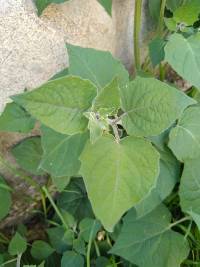
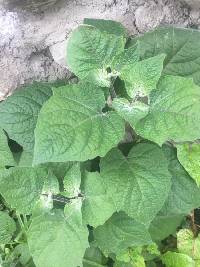
P. peruviana is an annual in temperate locations, but a perennial in the tropics. As a perennial, it develops into a diffusely branched shrub reaching
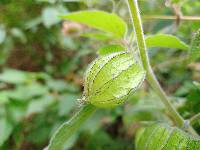
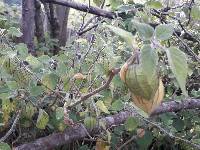
The inflated, papery calyx is a prominent feature. The calyx is accrescent until the fruit is fully grown; at first, it is of normal size, but after the petals fall, it continues to grow until it forms a protective cover around the growing fruit. If the fruit is left inside the intact calyx husks, its shelf life at room temperature is about 30–45 days. The calyx is inedible.
The fruit is a round, smooth berry, resembling a miniature yellow tomato 1.25–2 centimetres (1⁄2–3⁄4 in) wide. Removed from its calyx, it is bright yellow to orange in color, and sweet when ripe, with a characteristic, mildly tart grape-like flavor.
@media all and (max-width:720px){
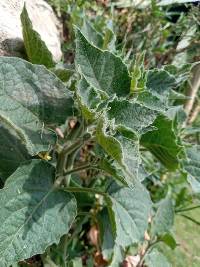
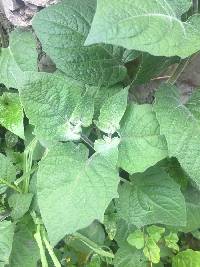
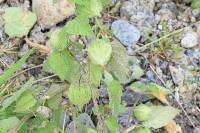
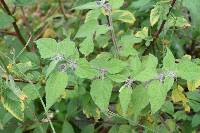
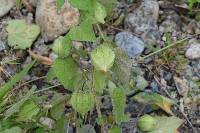
Hairy foliage
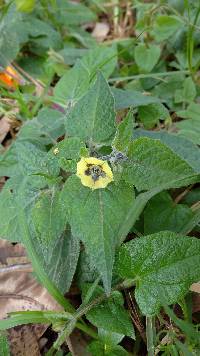
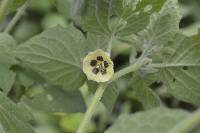
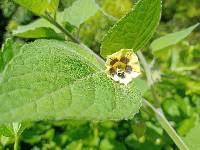
Flowering
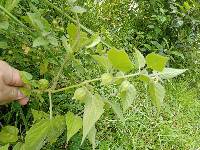
Immature fruit in green calyx
Calyx open, exposing the ripe fruit
Fruit bunch in hand
Taxonomy
P. peruviana is closely related to the tomatillo. As a member of the plant family Solanaceae, it is also more distantly related to a large number of edible plants, including tomatoes, eggplants, and potatoes.
Physalis peruviana was given a botanical species description by Carl Linnaeus in 1763. and...