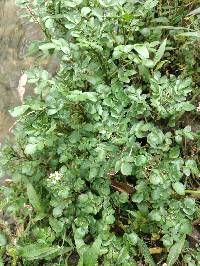
Watercress or yellowcress (Nasturtium officinale) is a species of aquatic flowering plant in the cabbage family, Brassicaceae.
Watercress is a rapidly growing perennial plant native to Eurasia. It is one of the oldest known leaf vegetables consumed by humans. Watercress and many of its relatives, such as garden cress, mustard, radish, and wasabi, are noteworthy for their piquant flavors.
Description
Watercress can grow up to 60 centimetres (24 in) in length. The stems are hollow and float in water. The leaf structure is pinnately compound. Small, white, and green inflorescences are produced in clusters and are frequently visited by insects, especially hoverflies, such as Eristalis flies.
Taxonomy
Watercress is listed in some sources as belonging to the genus Rorippa, although molecular evidence shows those aquatic species with hollow stems are more closely related to Cardamine than Rorippa. Despite the Latin name, watercress is not particularly closely related to the flowers popularly known as nasturtiums (Tropaeolum majus). T. majus belongs to the family Tropaeolaceae, a sister taxon to the Brassicaceae within the order Brassicales.
Distribution and habitat
An aquatic vegetable or herb, watercress has grown in many temperate locations worldwide.
Watercress was introduced into China through Hong Kong and Macao in the 1800s from Europe. Its cultivation also spread to highland areas in the tropical regions of Asia.
Clear fast-flowing chalk streams are the primary natural habitat for wild watercress in the UK. Many settlements in England are named after watercress, from Old English êacerse, including Kersey, Kesgrave, Kersal, and Kershopefoot.
Ecology
In some regions, watercress is regarded as a weed. When introduced into non-native environments, watercress can have negative impacts on native species. With the introduction of watercress, the organic matter in the sediment increases which in turn attracts predatory macroinvertebrates that feed on other plants in the...