Hura crepitans, known by the common names sandbox tree, possumwood, monkey no-climb, assacu (from Tupi asaku), and jabillo, is a species of evergreen tree in the family Euphorbiaceae, native to tropical regions of North and South America including the Amazon rainforest. It is naturalized in parts of Africa with sufficient rainfall. It is also present in parts of Tanzania, where it is considered an invasive species. Because its fruit explodes when ripe, it has also received the colloquial nickname "dynamite tree".
Description
The sandbox tree can grow to 60 metres (200 ft) in height, and up to 13.2 metres (43 ft) in girth at 1.8 m (6 ft) above the ground; its large ovate leaves grow to 60 cm (2 ft) long. The trees are monoecious, with red, un-petaled flowers. Male flowers grow on long spikes, while female flowers grow alone in leaf axils.
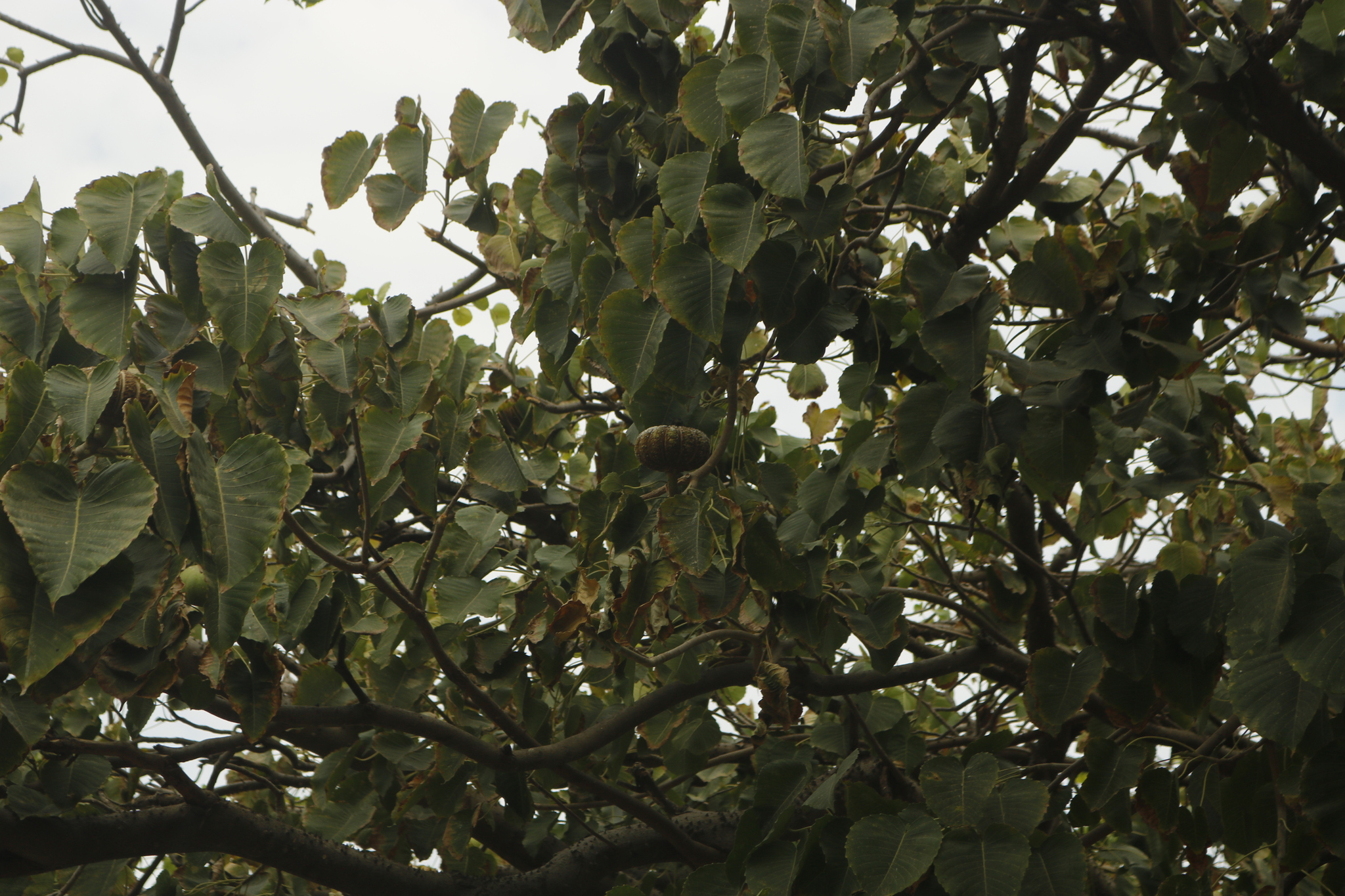
The fruit are large, pumpkin-shaped capsules, 3–5 cm (1–2 in) long, 5–8 cm (2–3 in) diameter, with 16 carpels arranged radially. Its seeds are flattened and about
The trunk is covered in sharp spikes that grow to more than 1 inch (25 mm) long, and on mature trees may be so thick that the bases of the spines touch. The sap is milky and contains toxins, including huratoxin. It has been traditionally used as a fish poison (piscicide), arrow poison, and in traditional medicine to treat a variety of ailments.
Uses
Its wood is light enough that indigenous people used it to make canoes. Fishermen have been said to use the milky, caustic sap from this tree to poison fish. The Caribs made arrow poison from its sap. In Africa the trees have been planted to provide shade, but demand for the wood for making household goods has resulted in the loss of many trees. The wood is used for furniture under the name "hura". In a time when most writing pens left wet ink on the page, the trees' unripe seed capsules were sawn in half to make decorative boxes (also called pounce pots) to...