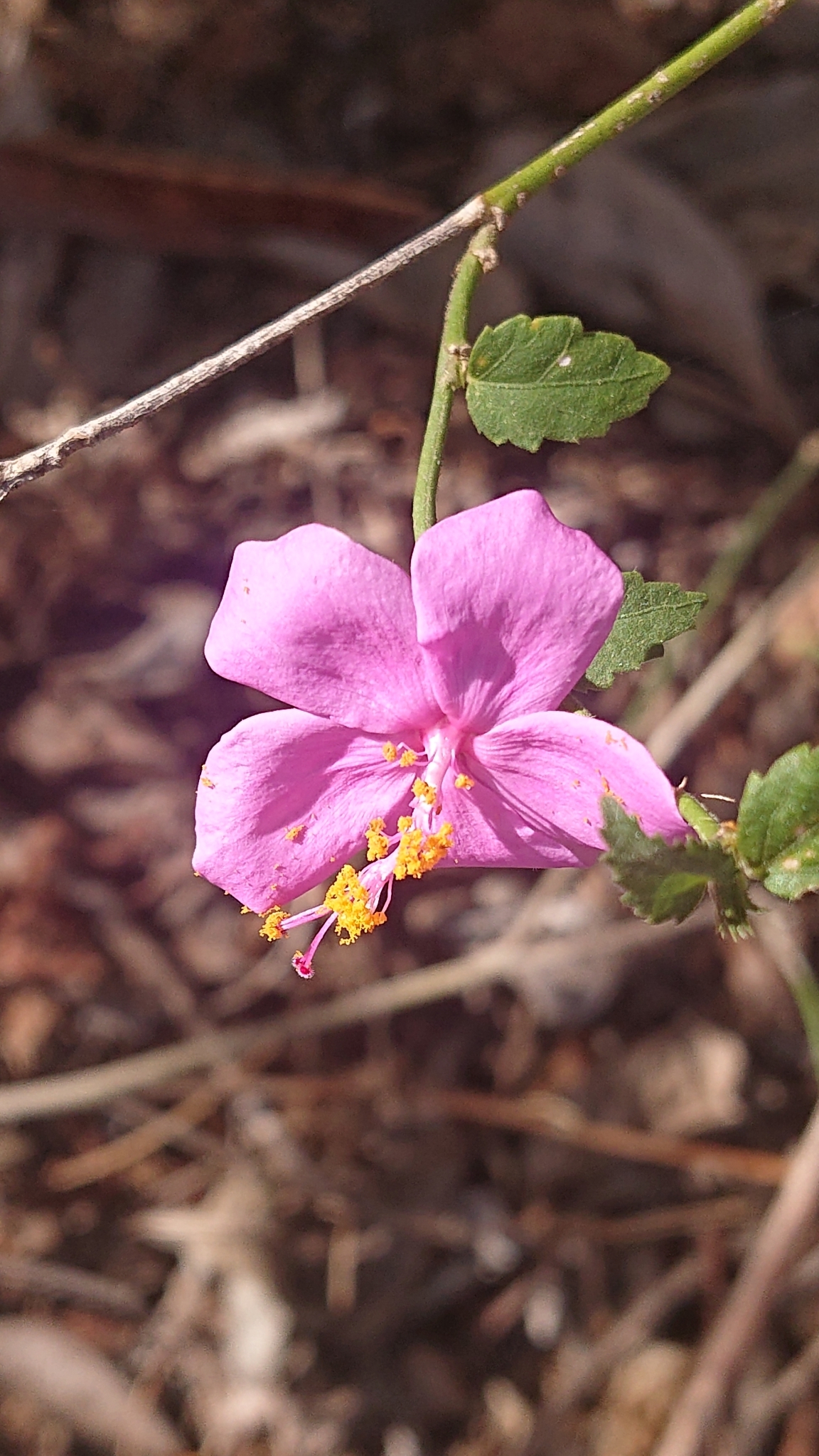
Hibiscus is a genus of plants in the family Malvaceae native to the tropics and subtropics. The genus is quite large, comprising 319 species. Hibiscus are renowned for their large, showy flowers and those species are commonly known simply as "hibiscus", or less widely known as rose mallow. The genus includes both annual and perennial herbaceous plants, as well as woody shrubs and small trees.
Several species are widely cultivated as ornamental plants, notably Hibiscus syriacus and Hibiscus × rosa-sinensis.
Description
Hibiscus tiliaceus in flower
Dehisced capsule fruit of Hibiscus praeteritus releasing hairy seeds
Hibiscus are annual or perennial, 0.1–4 m tall shrubs, subshrubs, trees, or herbs with alternate, usually stipulate, petiolate leaves with an entire or lobed margin. The leaf venation is pinnate or palmate.
The flowers are large and conspicuous. They are trumpet-shaped, with five or more petals, colour from white to pink, red, blue, orange, peach, and from 4–18 cm broad.
Flower colour in certain species, such as H. mutabilis and H. tiliaceus, changes with age. The fruit is a dry five-lobed capsule, containing several seeds in each lobe, which are released when the capsule dehisces (splits open) at maturity. It is of red and white colours. It is an example of complete flowering.
Known for its hardiness, Hibiscus rosa-sinensis withstands ailments and pests, and is tough in the face of both too much water and/or drought.
Vegetative characteristics
Hibiscus are annual or perennial, 0.1–4 m tall shrubs, subshrubs, trees, or herbs with alternate, usually stipulate, petiolate leaves with an entire or lobed margin. The leaf venation is pinnate or palmate.