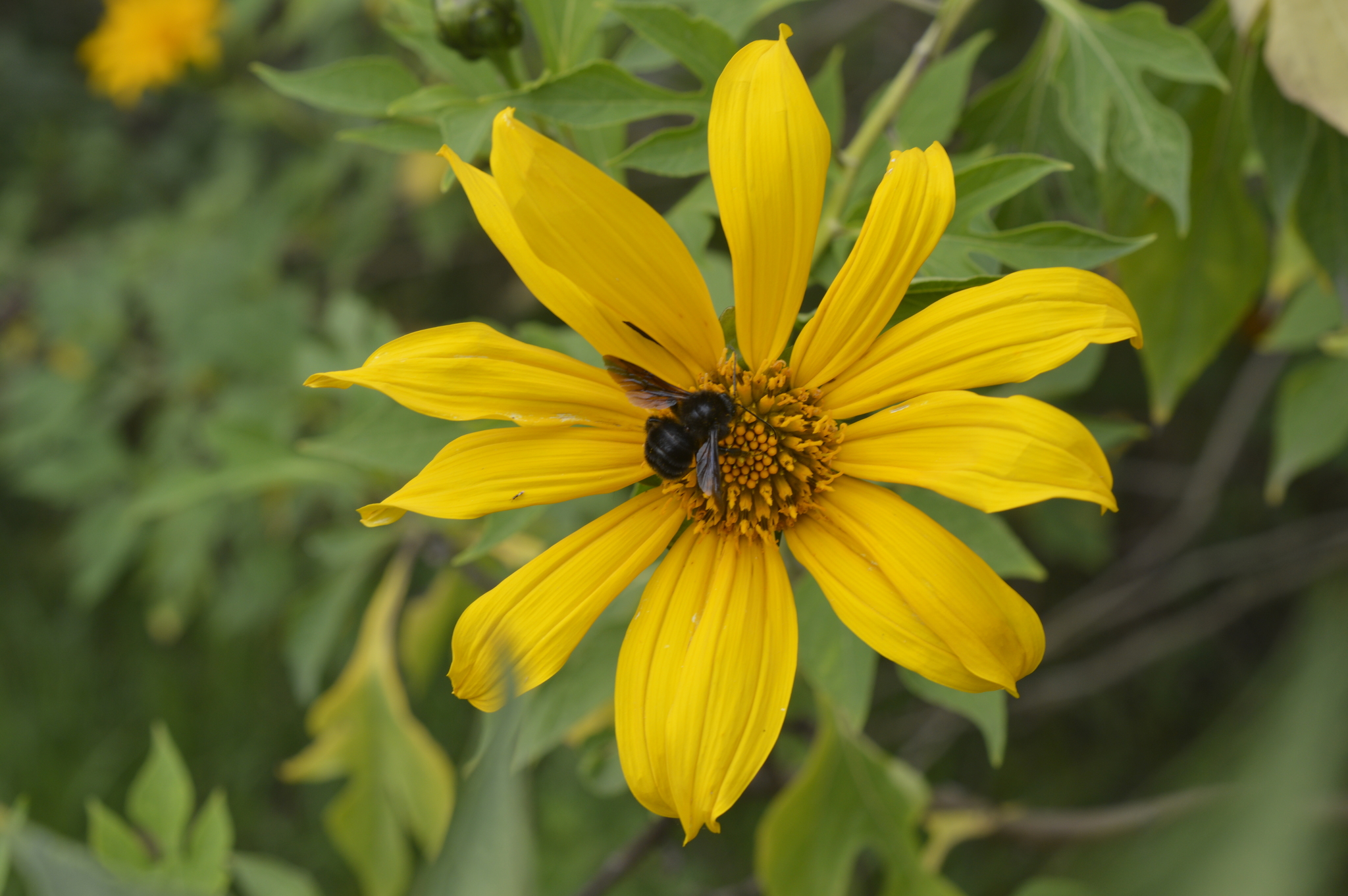
Bombus pauloensis is a neotropical bumblebee, formerly known as Bombus atratus, that is found throughout regions of South America, including Colombia, Ecuador, Brazil, Uruguay and Argentina. It lives in social colonies that include a founder queen/queens, workers and brood. B. pauloensis is somewhat unusual because of its potential to oscillate between polygynous (multiple queens) and monogynous (one queen) nesting cycles. Bombus pauloensis was the first species in the genus Bombus that was discovered to display such polygynous nesting patterns. The polygynous nesting cycles lead to certain specific types of behavior including queen-queen aggression. Nests can also be perennial, which is a characteristic rarely found in other bumblebees.
B. pauloensis can be helpful to agricultural because of their ability to pollinate different species of plants. B. pauloensis has been found to occupy a range of geographic areas and climates throughout South America. Colonies have the ability to thermoregulate nests and keep them a little bit warmer than the outside environment. Foraging workers use muscle contractions to maintain stable temperatures and coupe with seasonal and daily fluctuations in temperature.
Taxonomy and phylogenetics
B. pauloensis is a species of the genus Bombus in the family Apidae (honey bees, stingless bees, carpenter bees, bumblebees, orchid bees). Within Bombus, B. pauloensis is part of the formerly recognized New World subgenus Fervidobombus, which includes the closely relates species Bombus transversalis, and Bombus pullatus. Fervidobombus is currently part of the larger subgenus Thoracobombus. For most of the first century after its description in 1913, this species was known as Bombus atratus, but that name was a junior homonym, having been used for a different species of bumblebee in 1911. The names pauloensis and nigriventris had also been published for this species in 1913, and Brazilian researchers in 2012 adopted the former as the formal replacement for the name...