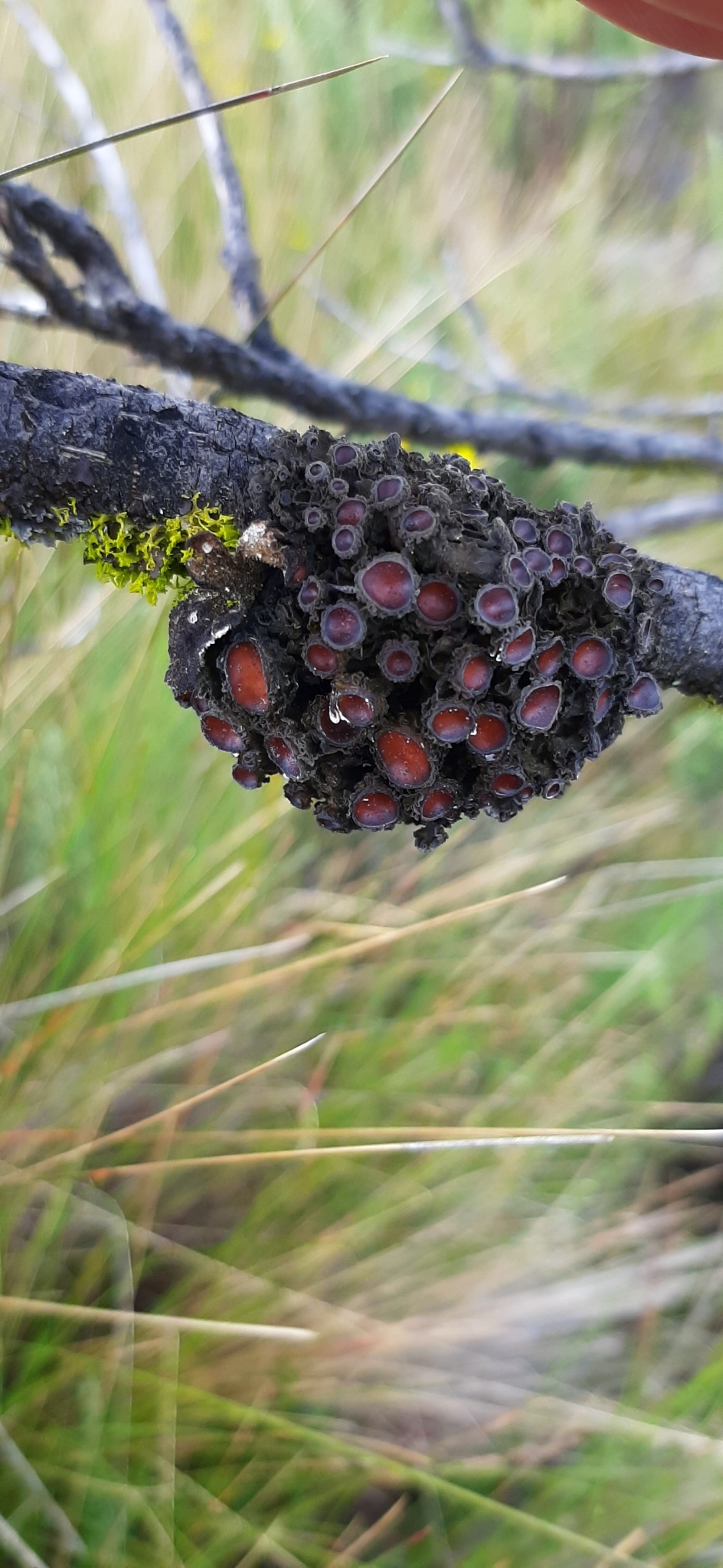
Leptogium is a genus of lichen-forming fungi in the family Collemataceae. It has about 110 species. Species formerly classified under Leptogium have since been divided among the genera Leptogium, Pseudoleptogium, and Scytinium. Leptogium lichens are predominantly found on tree bark or soil, often among mosses, and sometimes on rocks in moist environments.
Taxonomy
In 2013, a proposal supported by molecular phylogenetics data was made to conserve the genus Leptogium with a conserved type, aiming to maintain the current broader classification including both small-squamulose and larger foliose species within Leptogium, while segregating the smaller squamulose species into Scytinium. This conservation was recommended by a vote of 14-0-1 to prevent the necessity of reclassifying about 100 species into new genera such as Malotium. The proposal was widely supported by the Nomenclature Committee for Fungi as it simplifies the taxonomy and maintains historical continuity for the genus Leptogium.
A broad molecular re-assessment of the jelly lichens (Collemataceae) showed that the long-used genera Collema and Leptogium were not each monophyletic. Using four DNA markers, the authors recovered ten well-supported lineages and, to align names with both molecules and morphology, they treated those lineages as genera. In that framework Leptogium is re-circumscribed to the clade formed by “B+C” in their trees, the group that includes Leptogium azureum—the conserved type species designated by Jørgensen and colleagues—so that the name Leptogium covers a coherent lineage. They also showed that a "true cortex" (a proper eucortex) has evolved several times, so cortex alone cannot define genera; instead, the revised classification combines molecular evidence with traits such as habitat, thallus size and anatomy, and spore type.
In this modern sense, Leptogium comprises the large, foliose, eucorticate jelly lichens, typically with lobes more than a few millimetres wide that...