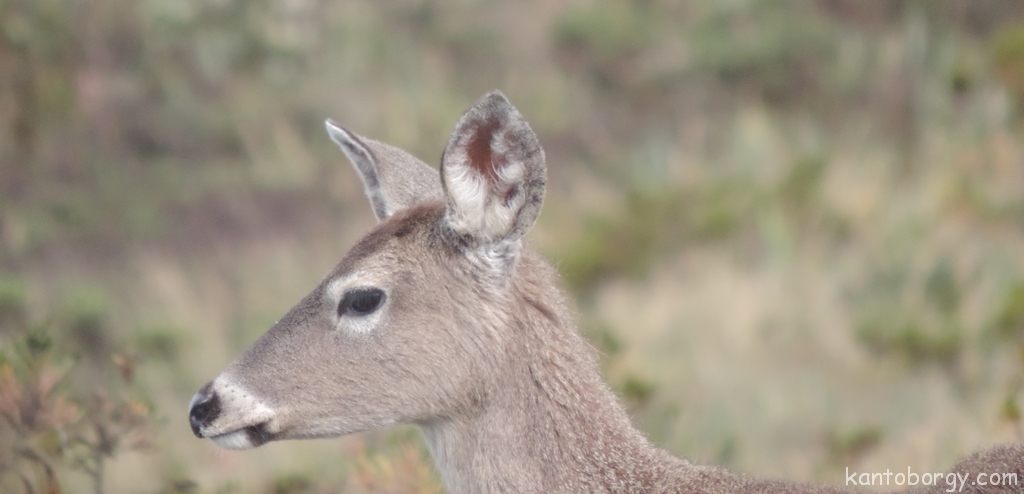
A deer (pl.: deer) or true deer is a hoofed ruminant ungulate of the family Cervidae (informally the deer family). Cervidae is divided into subfamilies Cervinae (which includes muntjac, elk, red deer, and fallow deer) and Capreolinae (which includes reindeer, white-tailed deer, roe deer, and moose). Male deer of almost all species (except the water deer), as well as female reindeer, grow and shed new antlers each year. These antlers are bony extensions of the skull and are often used for combat between males.
The musk deer (Moschidae) of Asia and chevrotains (Tragulidae) of tropical African and Asian forests are separate families that are also in the ruminant clade Ruminantia; they are not especially closely related to Cervidae.
Deer appear in art from Paleolithic cave paintings onwards, and they have played a role in mythology, religion, and literature throughout history, as well as in heraldry, such as red deer that appear in the coat of arms of Åland. Their economic importance includes the use of their meat as venison, their skins as soft, strong buckskin, and their antlers as handles for knives. Deer hunting has been a popular activity since the Middle Ages and remains a resource for many families today.
Etymology and terminology
"The Stag Hunt of Frederick III, Elector of Saxony" by Lucas Cranach the Elder, 1529
The word deer was originally broad in meaning, becoming more specific with time. Old English dēor and Middle English der meant a wild animal of any kind. Cognates of Old English dēor in other dead Germanic languages have the general sense of animal, such as Old High German tior, Old Norse djur or dȳr, Gothic dius, Old Saxon dier, and Old Frisian diar. This general sense gave way to the modern English sense by the end of the Middle English period, around 1500. All modern Germanic languages save English and Scots retain the more general sense: for example, Dutch/Frisian dier, German Tier, and Norwegian dyr mean 'animal'.