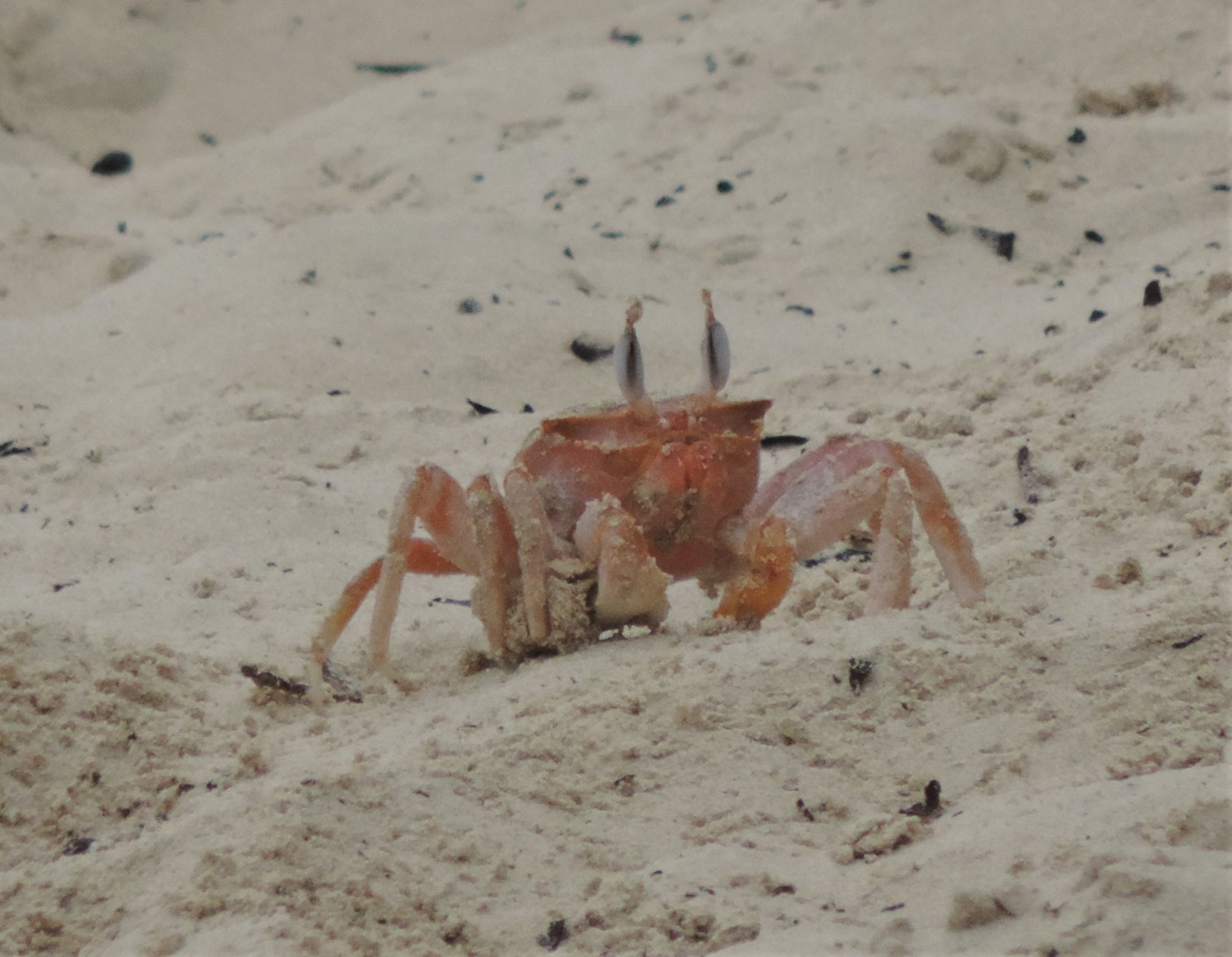
Ocypode gaudichaudii, also known as the painted ghost crab or cart driver crab, is a species of crab found on Pacific beaches from El Salvador to Chile as well as on the Galápagos Islands. The species was first described by Henri Milne-Edwards and Hippolyte Lucas in 1843.
They are diurnal crustaceans that display a red-orange color with sandy dots across the back of the carapace.
They are described with three distinct feeding behaviors that vary based on food source and development: as deposit feeders, scavengers, and predators. In all methods of feeding, visual clues and chemosensory are used to locate potential food. Their diet includes organic matter within sand, live organisms, and dead matter from both ocean and terrestrial sources.
In Peru, this crab is the host of the acanthocephalan parasite Neoandracantha peruensis.
Taxonomy
Ocypode gaudichaudii was first described in 1843 by Henri Milne-Edwards and Hippolyte Lucas as they voyaged along the coasts of South America. Ocypode ghost crabs are the most abundant semi-terrestrial crab in the brachyuran suborder on sand beaches.
Misidentification of Ocypode crabs in experiments and field studies has been a prevalent issue. In particular, O. gaudichaudii and H. occidentalis have been commonly misidentified due to unreliable methods of identifying juveniles.
Description
Painted ghost crabs have been described as opportunistic feeders in three different behaviors: as deposit feeders, scavengers, and predators. Typical food includes organic matter within sand, live organisms, and dead matter from both ocean and terrestrial sources. When adults, painted ghost crabs typically become specialized in deposit feeding and sift through the sand to find organic material as food. They develop specialized claws (or chelae), called truncated claws, which are used to forage in the sand as a makeshift shovel. The presence of truncated claws has been shown to allow a broader diet as the crabs are able to feed on both animals and...