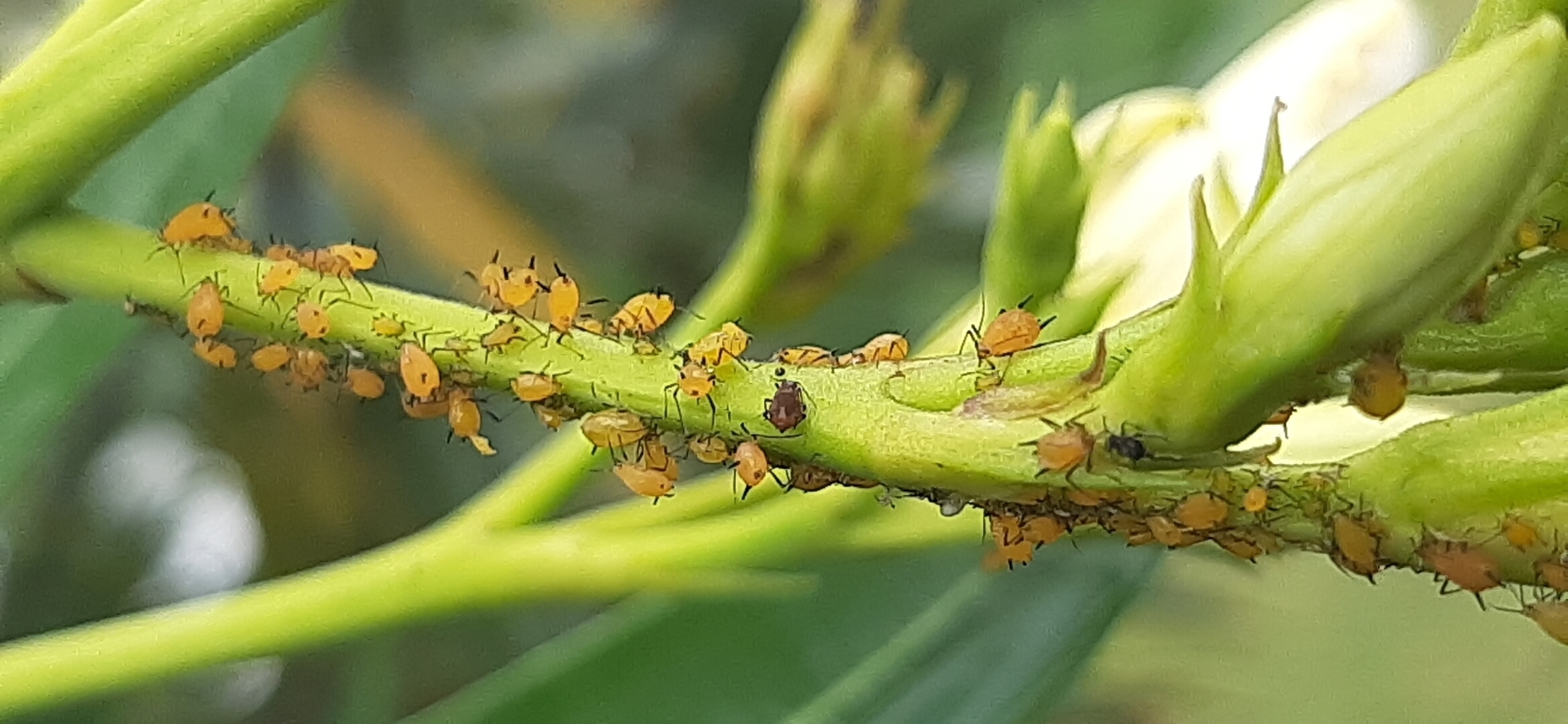
The Aphididae are a very large insect family in the aphid superfamily (Aphidoidea), of the order Hemiptera. These insects suck the sap from plant leaves. Several thousand species are placed in this family, many of which are considered plant/crop pests. They are the family of insects containing most plant virus vectors (around 200 known) with the green peach aphid (Myzus persicae) being one of the most prevalent and indiscriminate carriers.
Evolution
Aphids originated in the late Cretaceous about 100 million years ago (Mya), but the Aphidinae which comprises about half of the 4700 described species and genera of aphids alive today comes from their most recent radiation which occurred in the late Tertiary less than 10 Mya.
Reproduction
Most aphid species can reproduce both asexually and sexually, with several
parthenogenetic generations between each period of sexual reproduction. This is
known as cyclical parthenogenesis and, in temperate regions, sexual reproduction
occurs in autumn and results in the production of overwintering eggs, which hatch
the following spring and initiate another cycle. Many pest aphids, however, do not
overwinter as an egg but as nymphs or adults and others as both eggs and active
stages (see Williams and Dixon 2007). For their size, the parthenogenetic individuals have very short developmental times and potentially prodigious rates of increase
(de Réaumur 1737; Huxley 1858; Kindlmann and Dixon 1989; Dixon 1992). Thus,
aphids show very complex and rapidly changing within-year dynamics, with each
clone going through several generations during the vegetative season and being
made up of many individuals, which can be widely scattered in space. The survival
of the eggs and/or overwintering aphids determines the numbers of aphids present
the following spring.
The within-year dynamics of aphids are largely determined by seasonal changes
in host quality. Aphids do best when amino acids are actively translocated in the
phloem. In spring, the leaves...