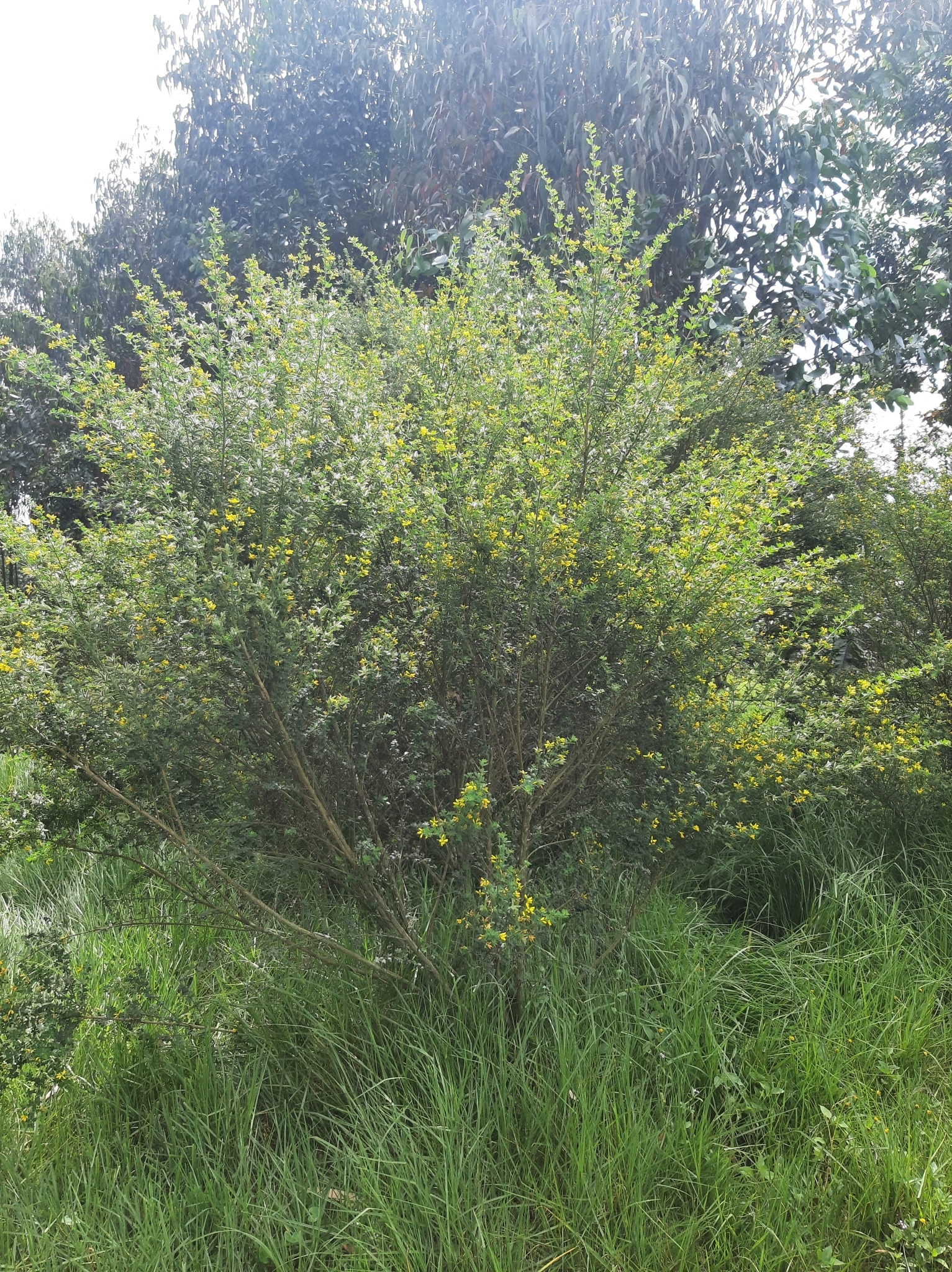
Genista monspessulana, commonly known as French broom, Montpellier broom, or Cape broom (Australia), is a woody leguminous perennial shrub. The yellow-flowering bush is native to the Mediterranean region, and while it may still be commonly sold in some garden stores, it is considered an invasive plant in most places where it has been introduced. It is a noxious weed on the western coast of the US and in parts of Australia.
Description
G. monspessulana grows to
It is related to the common broom and Spanish broom.
@media all and (max-width:720px){
Seedpods
Immature seedpods at the start of April
Distribution and habitat
G. monspessulana and related plants are common in European shrublands. French broom was originally distributed throughout Mediterranean Europe and northwest Africa, the Azores, and the Canary Islands. Due to its lower tolerance for frost than other broom species, it is common in warmer, lower elevation areas. It is found on coastal strips and in sunny inland areas, and does best with plentiful rainfall and sandy soils.
Ecology
When introduced to a new area, French broom can become an invasive plant. Its reproductive vigour and preference for Mediterranean climates make it a very successful species in California and the Pacific Northwest, where it is considered a severe noxious weed, covering over 40 kilohectares. It is even more widespread in Australia, where it covers 600 kilohectares and is also considered a noxious weed.
The plant often outcompetes native vegetation, forming dense fields where other species are almost completely crowded out. Stands of French broom can be so thick that they make meadows and pastures useless for wild and domestic animals. It can also shade out tree seedlings in reforested areas and tends to catch fire.
Toxicity
The leaves and seeds contain alkaloids which are poisonous to many large domestic animals.