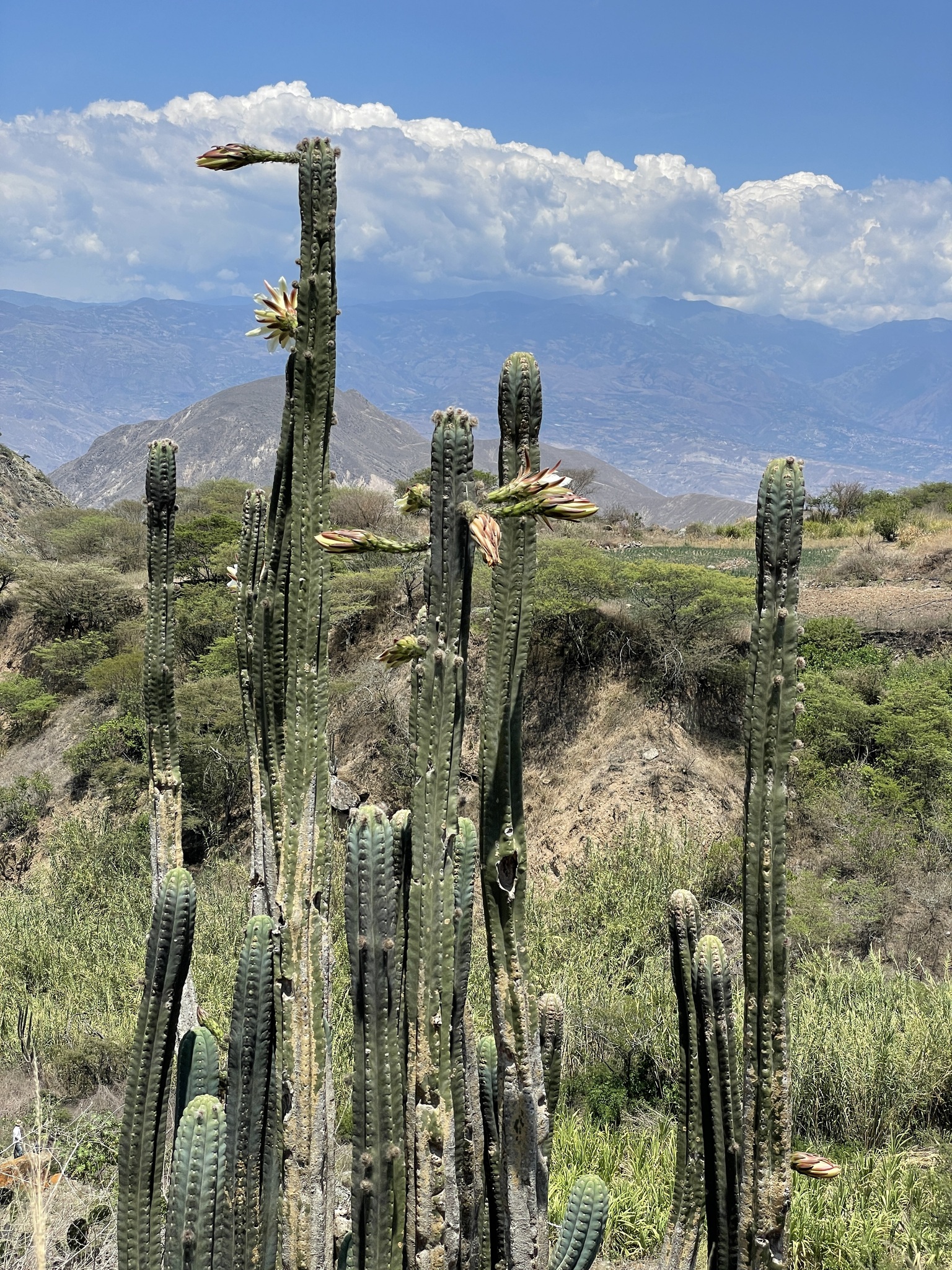
Echinopsis macrogona, synonym Trichocereus macrogonus, is a species of cactus found in Bolivia and Peru. Echinopsis macrogona is one of a number of similar species that may be called San Pedro cactus and is also known as the Peruvian torch cactus. Indigenous names include achuma and huachuma, although these too may be applied to similar species.
Description
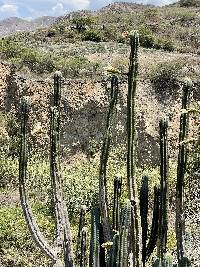
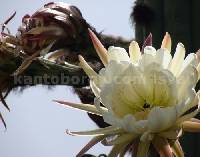
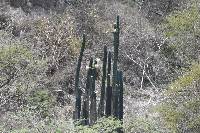
The species has erect stems, 2.5–5 m (8–16 ft) tall, with branches generally with a diameter of 6–15 cm (2–6 in), occasionally more. At the base of the stem there are usually seven or eight ribs. Generally the species has relatively few ribs, typically six to eight, occasionally five or nine. The circular areoles are 6 mm (0.2 in) across, grey or dark brown, with needle-like spines, and are spaced more than 2.5 cm (1.0 in) apart. The number and length of the spines varies. Older areoles may have up to 20, with three or four prominent, longer and more robust central spines up to 5 cm (2.0 in) long. The spines are darker at the end. The flowers are carried mostly near the top of the stems. In total they may be up to 21 cm (8.3 in) long. The tepals may be pale yellow or yellowish green, rarely pink. The small seeds are broadly ovoid, 0.9–1.1 mm (0.04–0.04 in) long.
Stem
Flower
Flower and buds side view
Taxonomy
The first description as Cereus macrogonus by Joseph zu Salm-Reifferscheidt-Dyck was published in 1850. The specific epithet macrogonus is derived from the Greek words makros for 'large' and gonia for 'edge' and refers to the ribs of the species. Vincenzo Riccobono placed the species in the genus Trichocereus in 1909. Heimo Friedrich and Gordon Douglas Rowley placed the species in the genus Echinopsis in 1974 as Echinopsis macrogona.
Other names have been applied to Echinopsis macrogona. The taxonomy of the species was revised in 2012 by Sofía Albesiano and Roberto Kiesling when the species was...