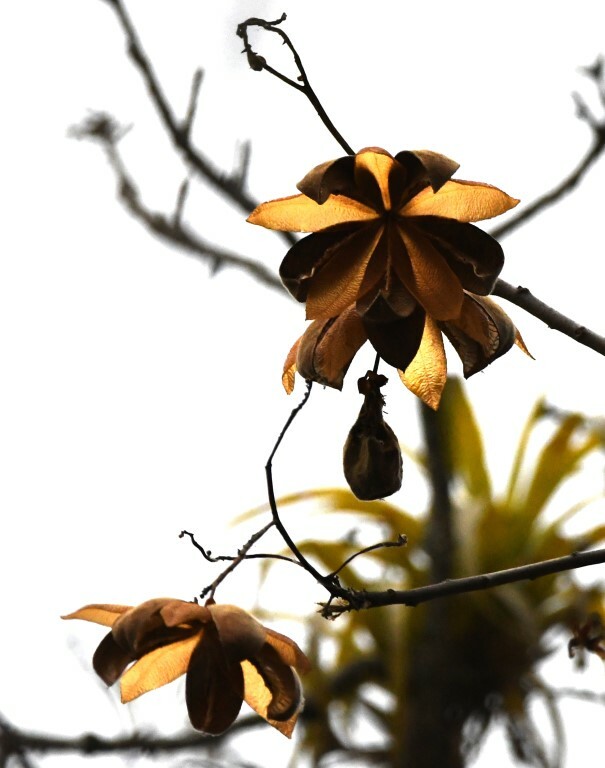
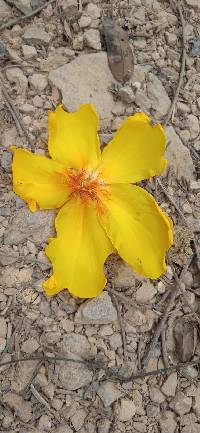
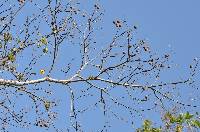
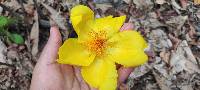
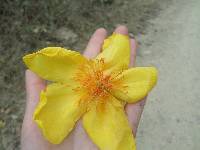
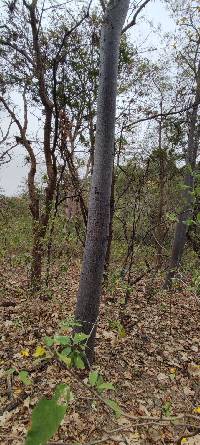
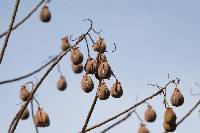
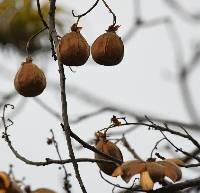
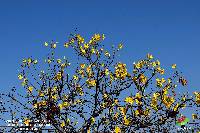
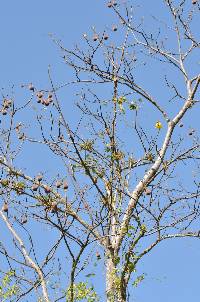
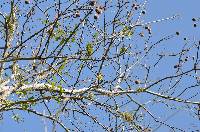
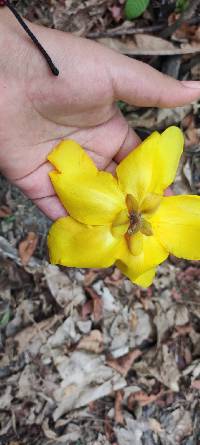
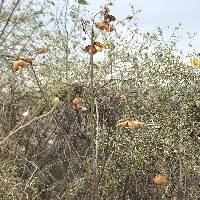
Cochlospermum vitifolium or rosa amarilla is a tree belonging to the family Bixaceae. It reaches up to 12 metres (40 ft) in height and its leaves are deciduous. Its flowers are showy, yellow, solitary, and large, up to 10 centimetres (4 in) across. They resemble roses but do not belong to the same family. It inhabits the dry jungles of southern Mexico to Central America from sea level to 1,200 metres (3,900 ft) elevation. Its wood produces a yellow-orange dye used for dyeing cotton clothes.
Description
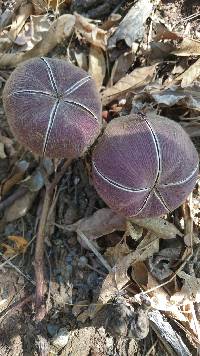
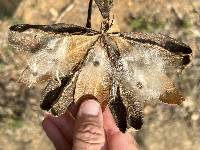
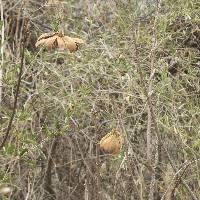
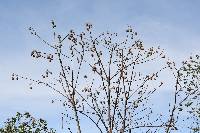
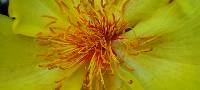
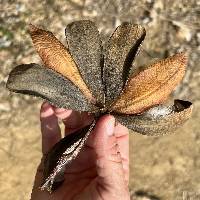
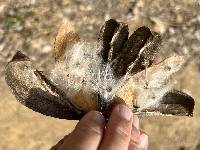
They are plants, trees, or shrubs, reaching a size of 3–15 metres (10–50 ft) tall. Leaves with 5–7 elliptic to oblong lobes, acuminate, nearly entire to serrate, glabrous or pubescent on the underside. Terminal panicle broad, flowers actinomorphic, 8–12 centimetres (3–5 in) wide; petals broadly obovate, emarginate, yellow; ovary 1-locular, with 5 parietal placentas. Capsule suberect to hanging, broadly ovate to obovate umbilicate, outer valve dark brown, gray or greenish, velvety or glabrous, inner valve ochre to cream, glabrous; seeds kidney-shaped with white gossypinous trichomes.
Distribution and habitat
Native to tropical America, it presents a continuous distribution, found in the tropics from western Mexico, through Central America and the northern part of South America, to Ecuador, Peru, Bolivia, Brazil, the Guyanas, and Trinidad. In Mexico, it is distributed in warm, semi-warm, and temperate climates from sea level to 1,000 metres (3,300 ft), present in disturbed vegetation associated with dunes, mangrove edges, savannah, tropical forests deciduous, subdeciduous, subperennial, and perennial, xerophytic shrubland on plains or hills, spiny forest, on the edges of cloud forest, oak and pine forests.