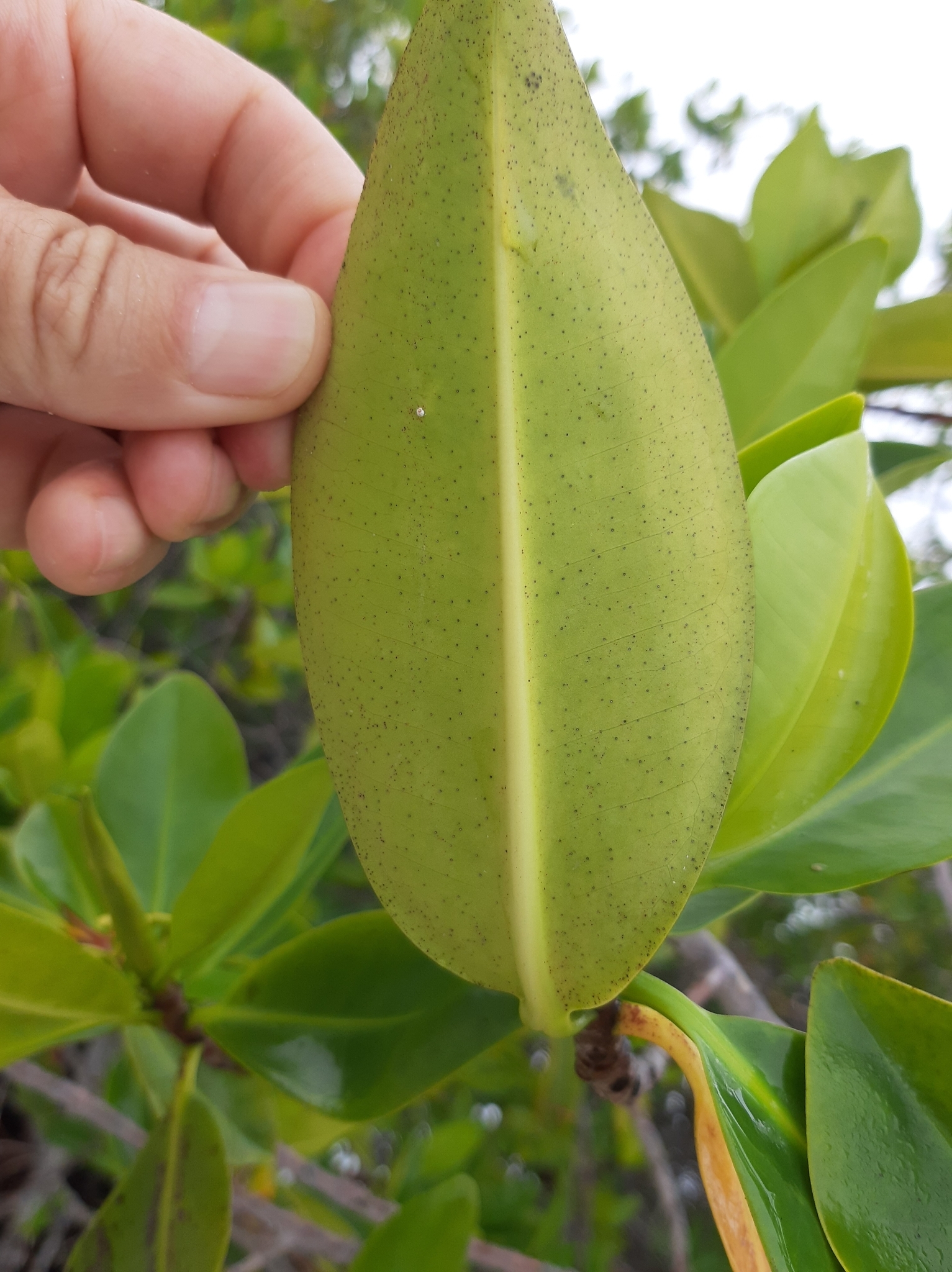
The Rhizophoraceae is a family of tropical or subtropical flowering plants. It includes around 147 species distributed in 15 genera. Under the family, there are three tribes, Rhizophoreae, Gynotrocheae, and Macarisieae. Even though Rhizophoraceae is known for its mangrove members, only the genera under Rhizophoreae grow in the mangrove habitats and the remaining members live in inland forests.
Taxonomy
This family is now placed in the order Malpighiales, though under the Cronquist system, they formed an order in themselves (Rhizophorales). It is sister group to Erythroxylaceae. The sister group to the tribe Rhizophoreae is Gynotrocheae. The generic relationships within the Macarisiae are not fully resolved.
Within the mangrove tribe Rhizophoreae, there are four genera: Rhizophora, Kandelia, Ceriops, and Bruguiera. Bruguiera is the basal genus and Rhizophora the most derived genus in the tribe. Rhizophora is the only pan-tropical genus that is distributed along the intertidal zones of both the Indo-West Pacific (IWP) and Atlantic-East Pacific (AEP) regions. The remaining mangrove genera are restricted to the IWP region.
Genera
As of September 2024, Plants of the World Online accepted these genera:
The tribe Macarisieae is characterized by a few plesiomorphies unknown in the rest of the family, such as superior ovary position, the presence of a seed appendage, and the absence of aerial roots.
Within Gynotrocheae, Crossostylis is morphologically distinct from other Gynotrocheae in having capsular fruits that split open at maturity and an appendage on a mature seed. In addition, Crossostylis possesses a multi-celled archesporium in ovules...