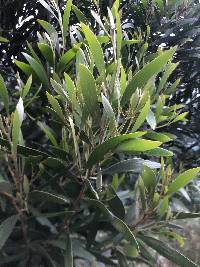
Acacia melanoxylon, commonly known as the Australian blackwood, is an Acacia species native to south-eastern Australia and an invasive species in other regions of the globe. The species is also known as blackwood, hickory, mudgerabah, Tasmanian blackwood, or blackwood acacia. The tree belongs to the Plurinerves section of Acacia and is one of the most wide-ranging tree species in eastern Australia and is quite variable mostly in the size and shape of the phyllodes.
Description
Phyllode and leaf on a young A. melanoxylon specimen.
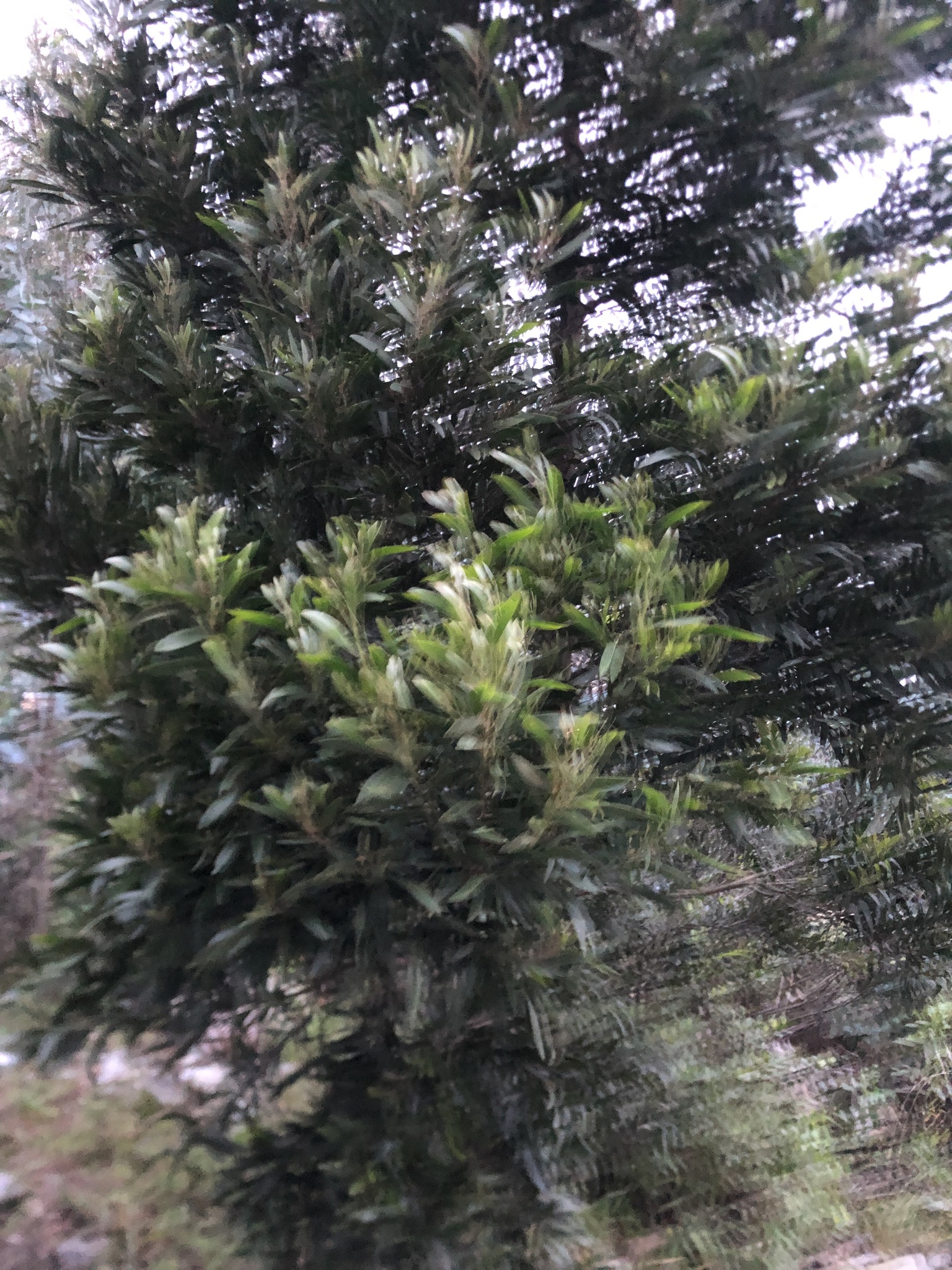
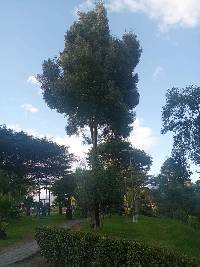
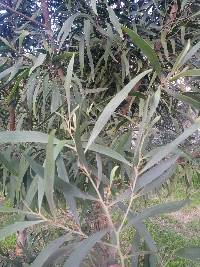
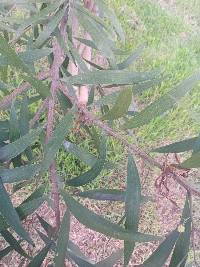
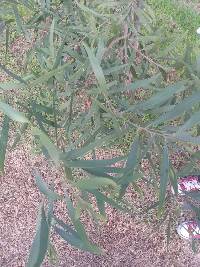
A. melanoxylon is able to grow to a height of around 20 m (66 ft) and has a bole that is approximately 150 cm (59 in) in diameter. It has deeply fissured, dark-grey to black coloured bark that appears quite scaly on older trees. It has angular and ribbed branches. The bark on older trunks is dark greyish-black in colour, deeply fissured and somewhat scaly. Younger branches are glabrous, ribbed and angular to flattened near the greenish coloured tips. The stems of younger plants are occasionally hairy. Like most species of Acacia, adult plants have phyllodes rather than true leaves. The glabrous, glossy, leathery, dark green to greyish-green phyllodes have a length of 4 to 16 cm (1.6 to 6.3 in) and a width of 6 to 30 mm (0.24 to 1.18 in) with a variable shape. They most often have a narrowly elliptic to lanceolate shape and are straight to slightly curved and often taper near the base and have three to five prominent longitudinal veins.
In its native habitat it blooms between July and December producing inflorescences that appear in groups of two to eight on an axillary raceme. The spherical flower heads have a diameter of 5 to 10 mm (0.20 to 0.39 in) and contain 30 to 50 densely packed pale yellow to nearly white flowers. Following flowering, smooth, firmly papery and glabrous seed pods form. The curved, twisted or coiled pods have a biconvex shape with a length of 4 to 12 cm (1.6 to...