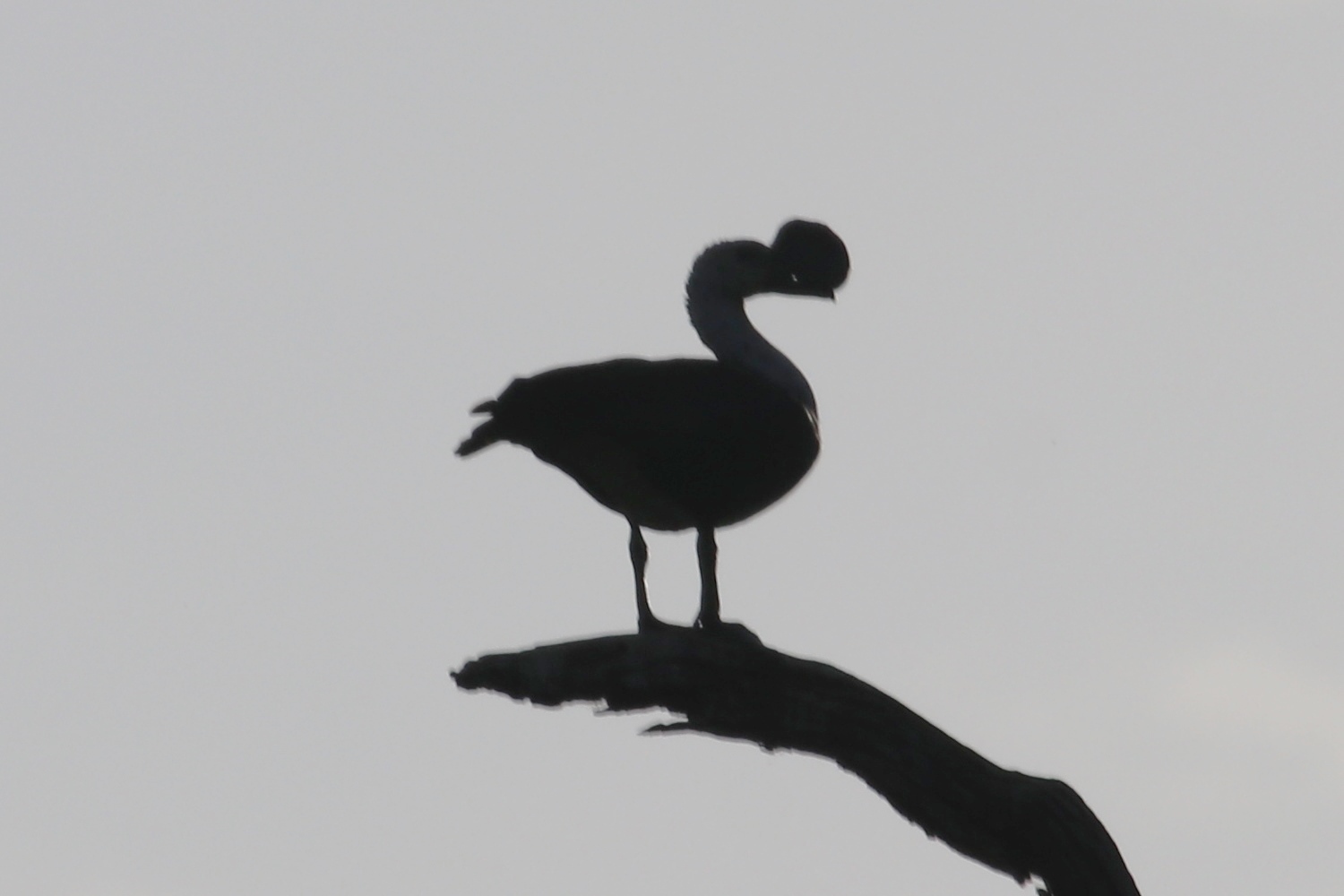
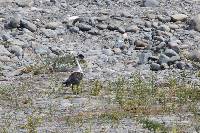
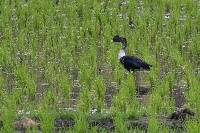
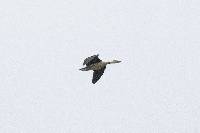
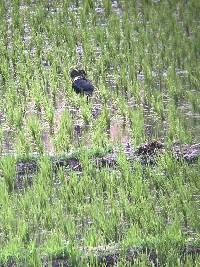
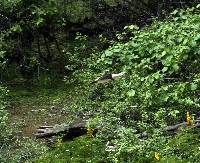
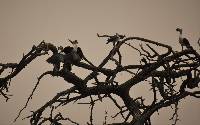
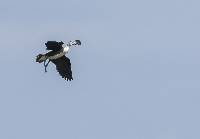
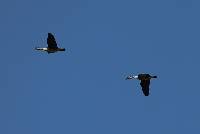
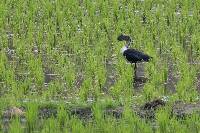
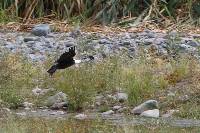
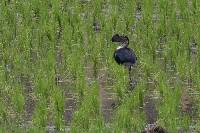
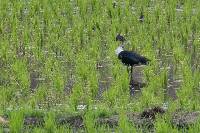
The comb duck or American comb duck (Sarkidiornis sylvicola), is an unusual duck found in tropical wetlands in continental South America south to the Paraguay River region in eastern Paraguay, southeastern Brazil and extreme northeastern Argentina, and as a vagrant on Trinidad.
Most taxonomic authorities split this species and the knob-billed duck from each other. The comb duck is generally smaller in size when compared to the knob-billed duck, and flanks are darker (black in males, medium grey in females).
Taxonomy
Uncertainty surrounds the correct systematic placement of this species. Initially, it was placed in the dabbling duck subfamily Anatinae. Later, it was assigned to the "perching ducks", a paraphyletic assemblage of waterfowl most of which are intermediate between dabbling ducks and shelducks. As the "perching ducks" were split up, the comb duck was moved to the Tadorninae or shelduck subfamily.
Analysis of mtDNA sequences of the cytochrome b and NADH dehydrogenase subunit 2 genes, however, suggests that it is a quite basal member of the Anatidae, vindicating the earliest placement, but its closest living relatives cannot be resolved to satisfaction without further study.