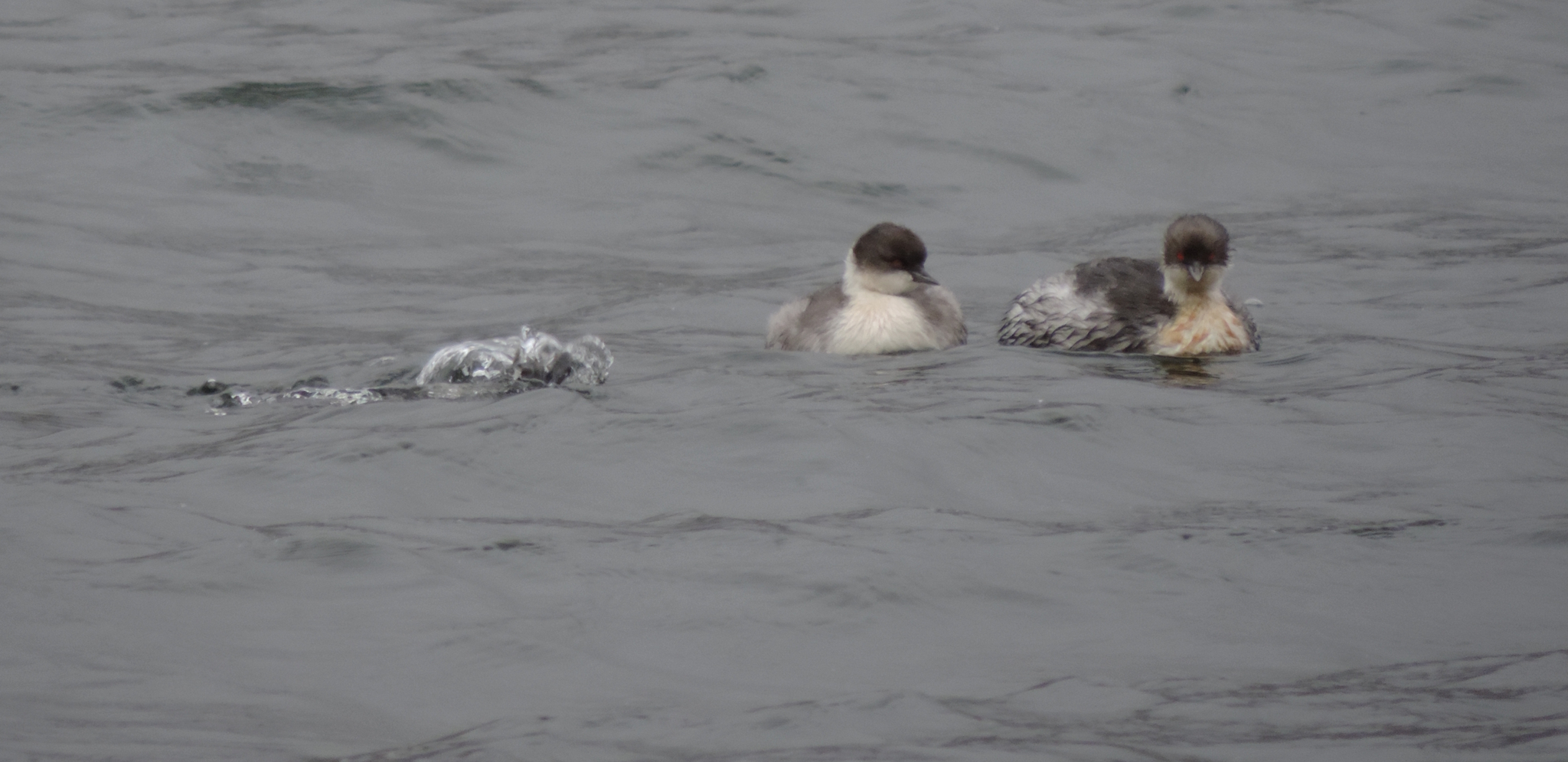
Grebes () are aquatic diving birds in the order Podicipediformes (). Grebes are widely distributed freshwater birds, with some species also found in marine habitats during migration and winter. Most grebes fly, although some flightless species exist, most notably in stable lakes. The order contains a single family, the Podicipedidae, which includes 22 species in six extant genera.
Although, superficially, they resemble other diving birds such as loons and coots, they are most closely related to flamingos, as supported by morphological, molecular and paleontological data. Many species are monogamous and are known for their courtship discipline, with the pair performing synchronized dances across the water's surface. The birds build floating vegetative nests where they lay several eggs. About a third of the world's grebes are listed at various levels of conservation concerns—the biggest threats including habitat loss, the introduction of invasive predatory fish and human poaching. As such, three species have gone extinct.
Etymology
The word "grebe" comes from the French grèbe, which is of unknown origin and dates to 1766. It is possibly from the Breton krib meaning 'comb', this referring to the crests of many of the European species. However, grèbe was used to refer to gulls. The appearance of "grebe" in the English language was introduced in 1768 by the Welsh naturalist Thomas Pennant when he adopted the word for the family. Some of the smaller species are often referred to as "dabchick", which originated in the mid-16th century in English, as they were said to be chick-like birds that dive. The clade names "Podicipediformes" and "Podicipedidae" are based on the genus Podiceps which is a combination of Latin of podex, gen. podicis ("rear-end" or "anus") and pes ("foot"), a reference to the placement of a grebe's legs towards the rear of its body.
Field characteristics
Grebes are small to medium-large in size ranging from the least grebe (Tachybaptus dominicus), at 120 g...