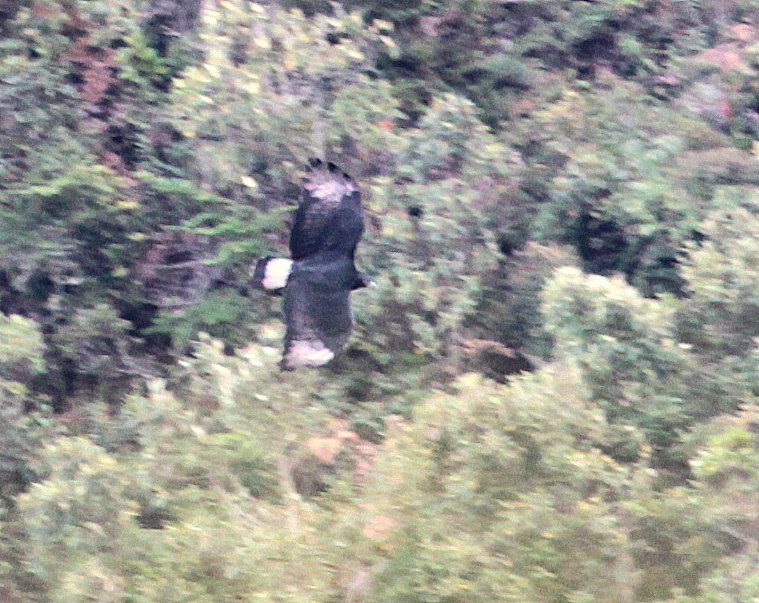
The black-and-chestnut eagle (Spizaetus isidori), also known as Isidor's eagle, is a large South American species of bird of prey in the family Accipitridae. It is often placed in the monotypic genus Oroaetus. However, recent genetic testing indicates that this species is fairly closely related to Spizaetus species and thus the species should be included in that genus. The black-and-chestnut eagle is a typical forest raptor, hunting primarily small to medium-sized mammals and birds and constructing a large nest in a tall tree. Unfortunately, the twin causes of habitat destruction and persecution have caused population declines and the black-and-chestnut eagle is considered to be an Endangered species by the IUCN.
Taxonomy
Its scientific name was chosen in honour of French zoologist, Isidore Geoffroy Saint-Hilaire.
Habitat and status
It is found in humid montane forests, normally at elevations between 1,800 to 2,500 m (5,900 to 8,200 ft), in the Andes from northern Argentina, through Bolivia, Peru, Ecuador, Colombia, to Venezuela, with isolated populations in the Venezuelan Coastal Range, Serranía del Perijá and Sierra Nevada de Santa Marta. It is generally local and rare. Widespread cutting of primary forest in foothills throughout the Andes is the primary cause of the precipitous decline of this species. Deforestation in the forests of the Andes is rampant as in much of the tropics. There are an estimated 1,400-4,200 mature individuals of black-and-chestnut eagles left in the wild as of 2024. Further exacerbating the species' conservation issues are its continued persecution as a killer of domestic fowl. Black-and-chestnut eagles are a control species because they help to maintain the balance of ecosystems by hunting other animals for food.
Description
It is a fairly large eagle and very large raptor at 60 to 80 cm (24 to 31 in) in total length with a wingspan of 147 to 180 cm (4 ft 10 in to 5 ft 11 in). It is largest current member of the...