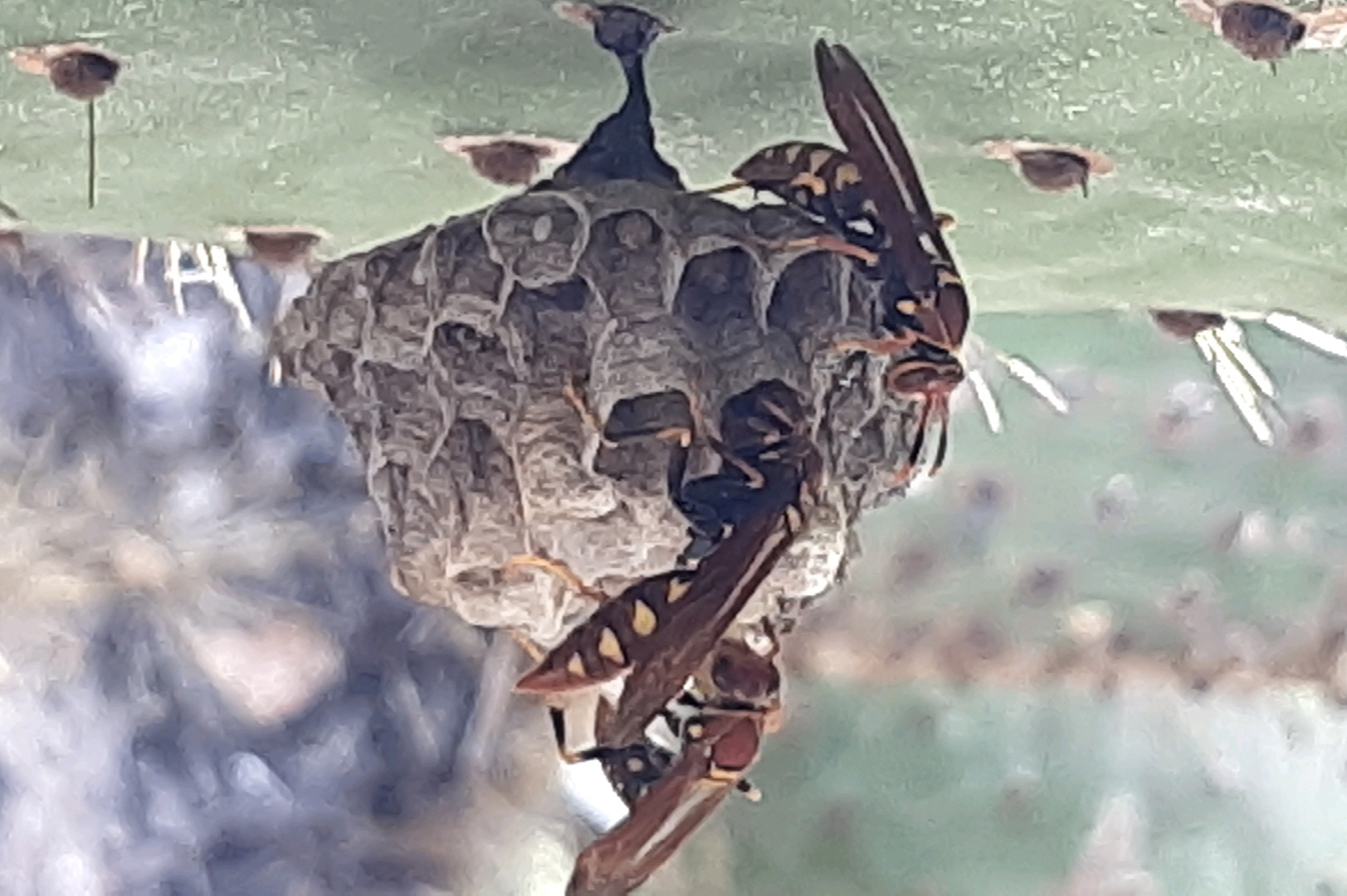
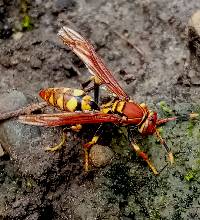
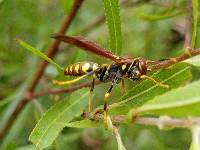
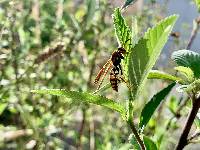
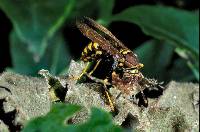
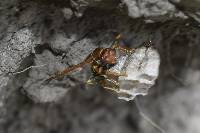
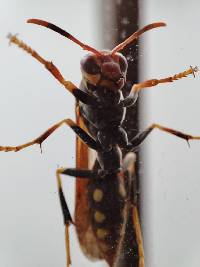
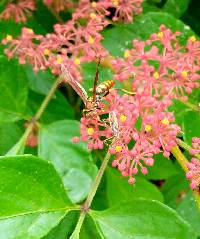
Polistes versicolor, also known as the variegated paper wasp or yellow paper wasp, is a subtropical social wasp within Polistes, the most common genus of paper wasp. It is the most widely distributed of South American wasp species and is particularly common in the Southeastern Brazilian states. The P. versicolor nest, made of chewed vegetable fiber, is typically a single, uncovered comb attached to the substrate by a single petiole. The yellow wasp is frequently found in urban areas. New nests and colonies are usually founded by an association of females, sometimes in human buildings.
The P. versicolor colony cycle broadly ranges from 3 to 10 months, although there appears to be no relationship between the colony's development and the season of the year. While P. versicolor do have clear annual colony cycles, many young queens have the opportunity to hibernate during the winter, forming optional winter aggregations. Dominance hierarchies within these aggregations are characterized by physical aggression of the dominant female(s) towards the associated females, who tend to be sisters. Wagging movements are also often used as a form of communication within the colony. P. versicolor is generally predatory, capturing a wide range of insects, although it often feeds on pollen and nectar as well. Therefore, P. versicolor can be useful as a pollinator or as effective pest control.
Taxonomy and phylogeny
The French entomologist Guillaume-Antoine Olivier described P. versicolor in 1791. Its species name, versicolor, is a Latin term that means a variety of colors, perhaps referring to the bright coloration of its abdomen and thorax. Within the subfamily Polistinae of the family Vespidae, the genus Polistes (paper wasps) has about 200 species distributed throughout the world mostly in the tropical region. A widely studied genus, Polistes is now considered a model organism useful in understanding the evolution of social behavior. P. versicolor is a member of the New World Polistes, which are...