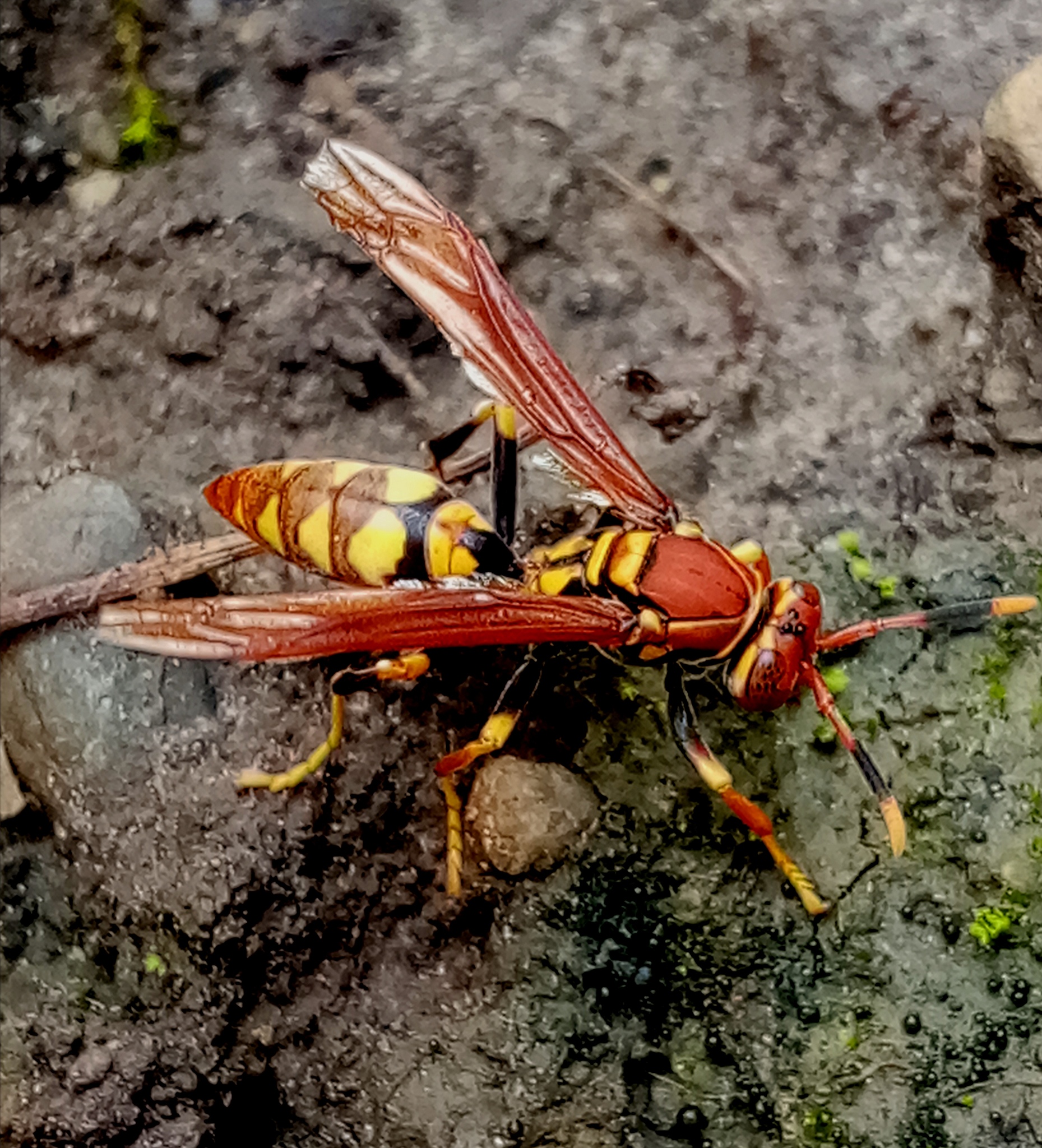
Polistes is a cosmopolitan genus of paper wasps and the only genus in the tribe Polistini. Vernacular names for the genus include umbrella wasps, coined by Walter Ebeling in 1975 to distinguish it from other types of paper wasp, in reference to the form of their nests, and umbrella paper wasps. Polistes is the single largest genus within the family Vespidae, with over 200 recognized species. Their innate preferences for nest-building sites leads them to commonly build nests on human habitation, where they can be very unwelcome; although generally not aggressive, they can be provoked into defending their nests. All species are predatory, and they may consume large numbers of caterpillars, in which respect they are generally considered beneficial.
Description
As part of subfamily Polistinae, Polistes wasps are covered in short and inconspicuous hair, have a clypeus with a pointed apex, have a gena that is wide throughout, tergum 1 of the metasoma is almost straight to gently arched in profile, the tibia of the mid leg has two spurs, and the legs end in simple tarsal claws. The genus can be distinguished from other Polistinae by a sessile metasoma (the first segment at most slightly longer than wide) and the fourth tarsomeres of the mid and hind legs being symmetrical.
Polistes show sexual dimorphism, with males having seven externally visible metasomal segments whereas females have six. This trait is shared with other vespid wasps.
Polistes species have single-layered nests which are shaped like an umbrella, with the cells exposed to the air from the bottom, and no layer wrapping around the nest. The nests are suspended from a surface by a petiole and are constructed from a paper-like substance made of a mix of saliva and wood fibres chewed off old and soft wood or dead twigs. Many Polistes species in general often have nests supported by a longer petiole than those of Vespula.
Biochemistry
Carlson et al 1998 finds the cuticular hydrocarbons of Polistes to be,...