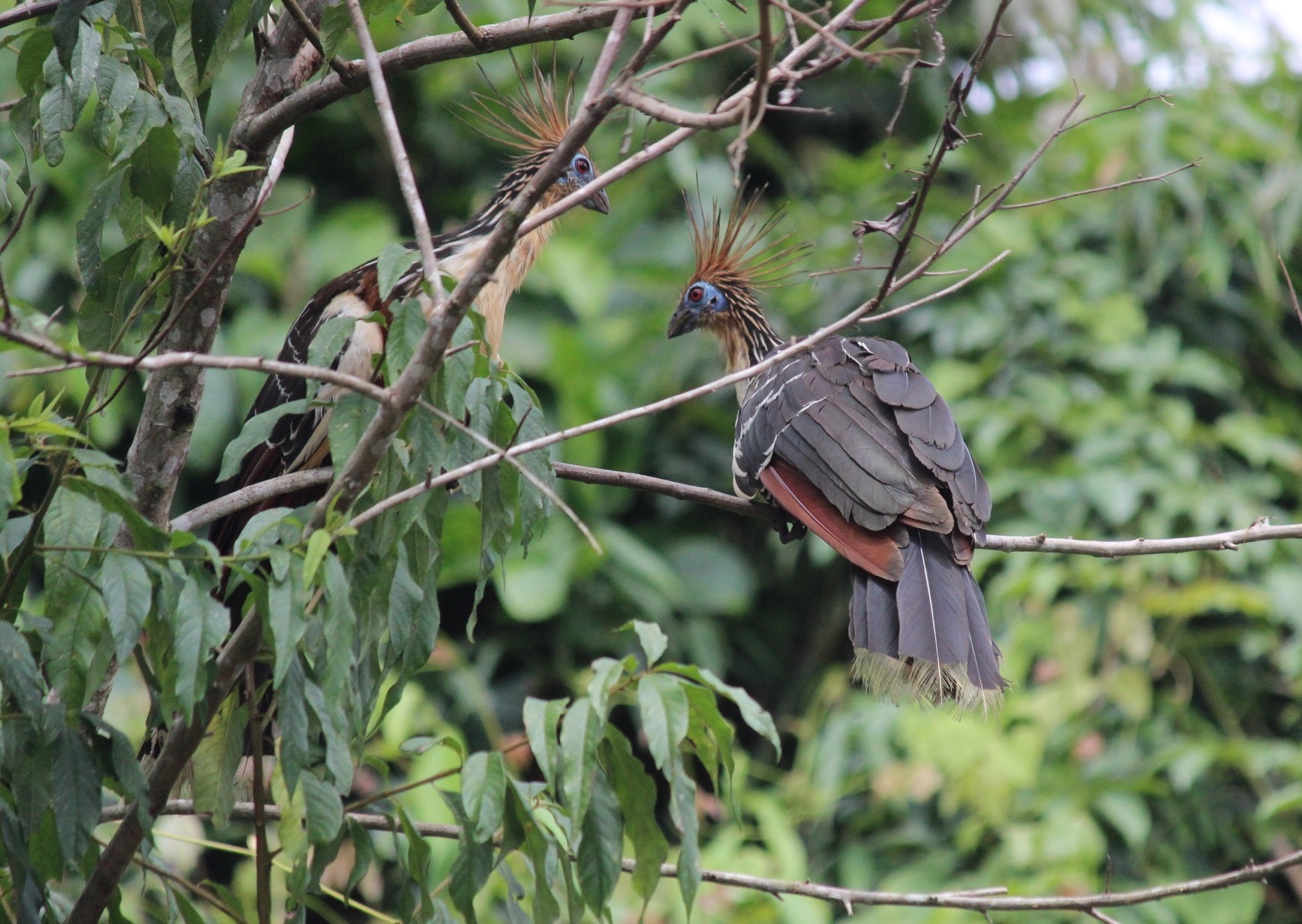
The hoatzin ( WAHT-sin, -seen; also HO-tsin and hoh-AT-sin) (Opisthocomus hoazin) is a species of tropical bird found in swamps, riparian forests, and mangroves of the Amazon and Orinoco Basins in South America. It is the only extant species in the genus Opisthocomus which is the only extant genus in the family Opisthocomidae under the order Opisthocomiformes. Despite being the subject of intense debate by specialists, the taxonomic position of this family is still far from clear.
The hoatzin is notable for its chicks having primitive claws on two of their wing digits. It is unique among birds in possessing a digestive system that significantly supports the fermentation and the effective breakdown of plant matter, a trait more commonly known from herbivorous ungulate-ruminant mammals and some primates. This bird is also the national bird of Guyana, where the local name for this bird is Canje pheasant.
Description
The hoatzin is pheasant-sized, with a total length of 65 cm (26 in), and a long neck and small head. It has an unfeathered, blue face with maroon eyes, and its head is topped by a spiky, rufous crest. The long, sooty-brown tail is bronze-green tipped with a broad, whitish or buff band at the end. The upper parts are dark, sooty brown-edged buff on the wing coverts and streaked buff on the mantle and nape. The underparts are buff, while the crissum (the undertail coverts surrounding the cloaca), primaries, underwing coverts, and flanks are rich rufous-chestnut, but this is mainly visible when the hoatzin opens its wings.
It is a noisy bird, and makes a variety of hoarse calls, including groans, croaks, hisses, and grunts. These calls are often associated with body movements, such as wing spreading.
Hoatzin chicks have two claws on each wing. Immediately after hatching, they can use these claws and their oversized feet to scramble around tree branches without falling into the water. When predators such as the great black hawk attack a...